
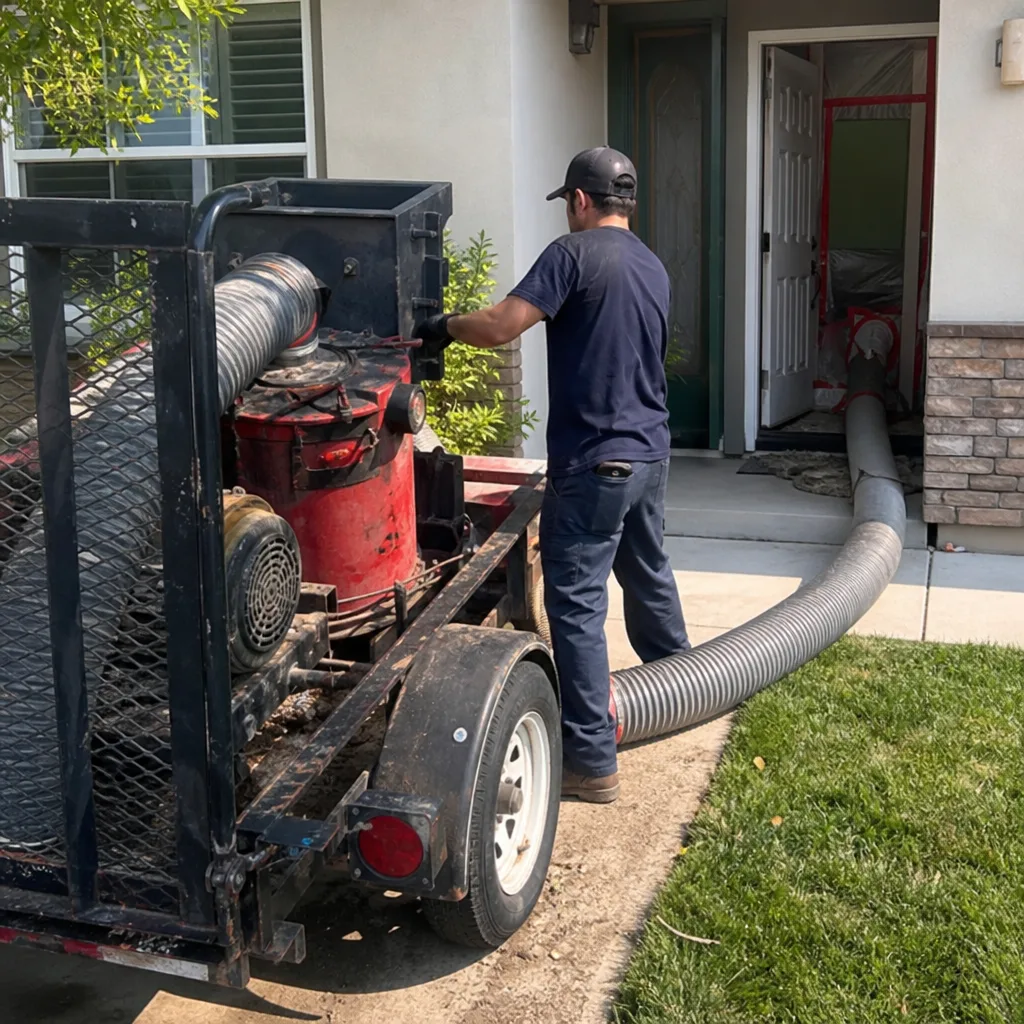
Last updated October 15, 2026
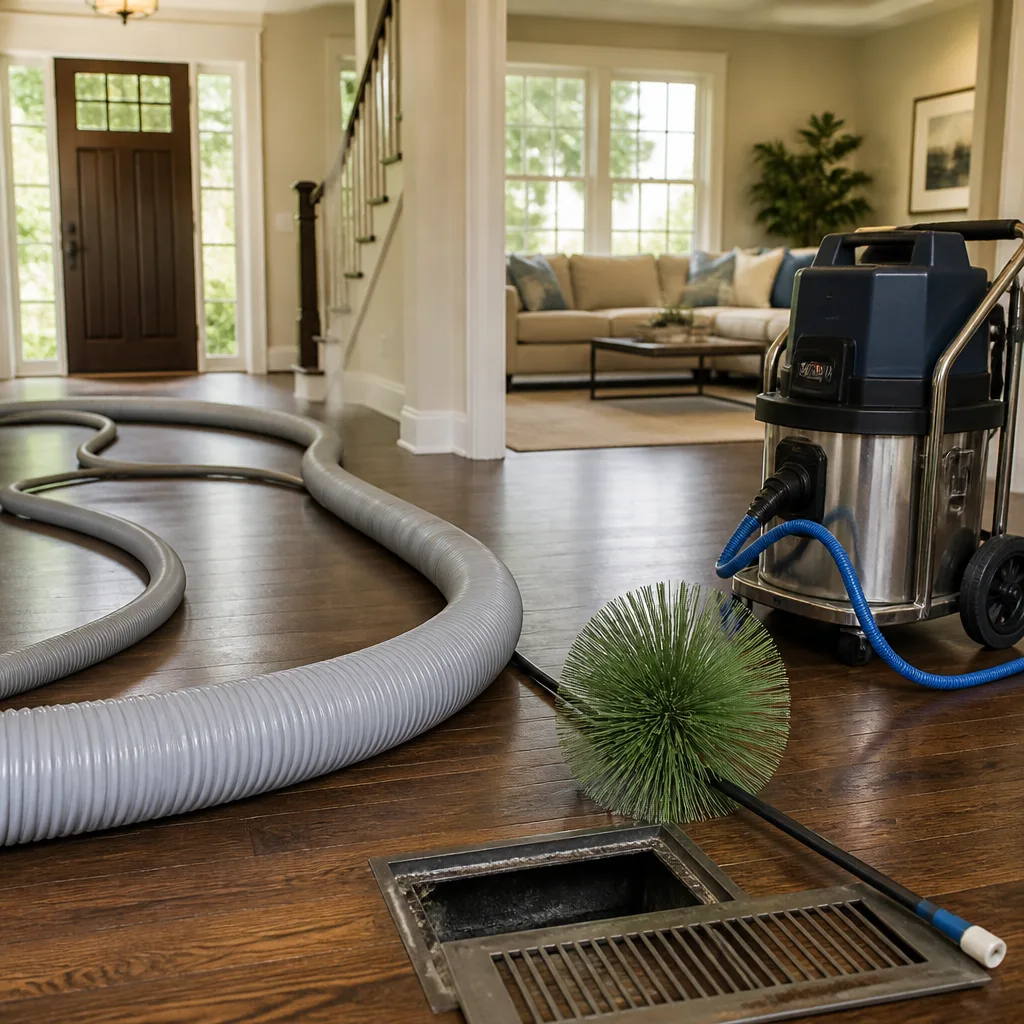 Whole-home duct cleaning
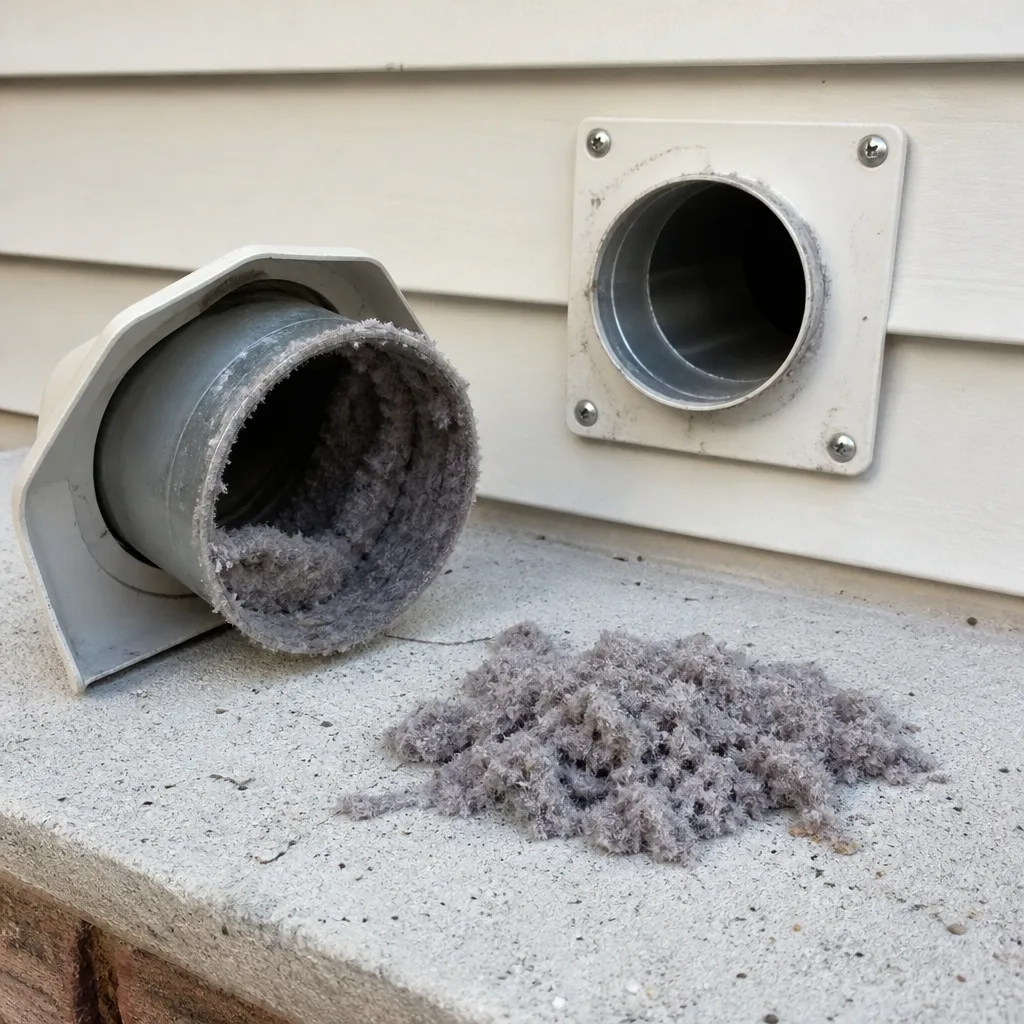 Dryer vent cleaning
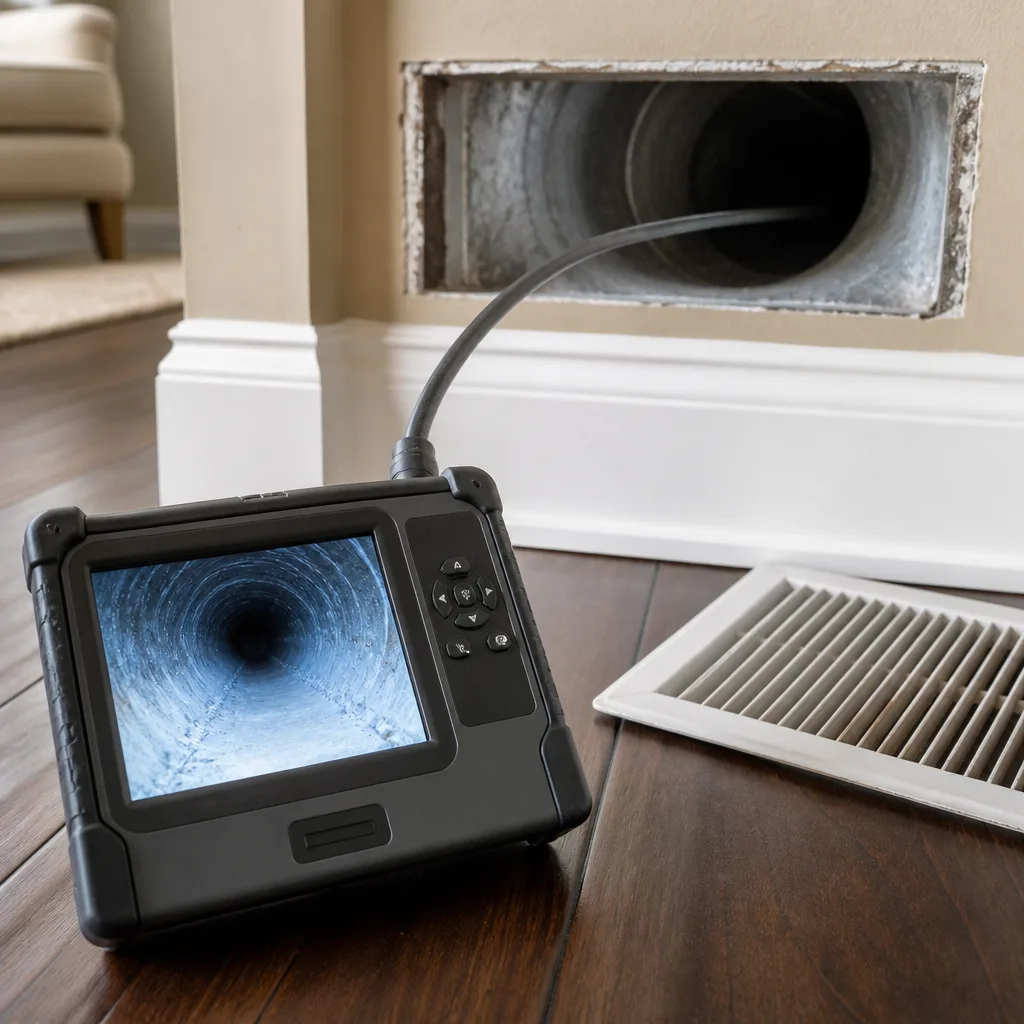 Camera inspection
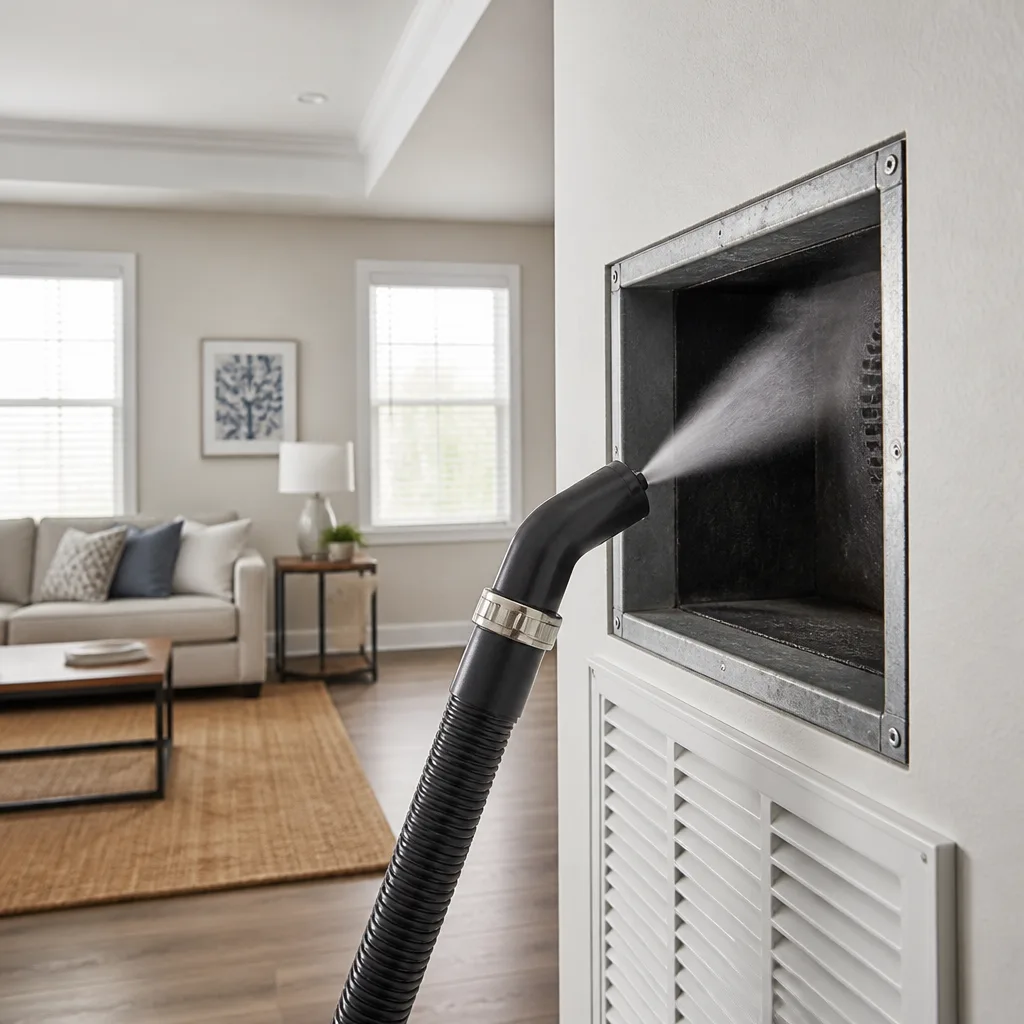 Sanitizing & deodorizing
Whole-system duct and dryer vent check with before-and-after photos - you see exactly what came out of your vents
That "$99 whole-house special" is a bait ad - the real number appears once they are in your hallway, or the "clean" is a shop-vac at the register. We photograph the inside of your ducts before and after instead.
Air Duct Cleaning Maintenance Checklist for Riverside Homeowners
Most duct maintenance checklists read like they were written by a contractor who assumes you already own an inspection camera and know what a plenum is. This one is different. It’s written for the person standing in the hallway on a Saturday morning, looking at a vent cover, wondering if that gray fuzz around the edge is normal or if it’s time to call someone. Here’s the counterintuitive part: the single most valuable maintenance step you can take between professional cleanings in Riverside costs nothing and takes about four minutes. Pull the return-air grille off the wall, shine a flashlight along the edge of the filter, and really look. Where the dust is concentrated, how dark it is, and whether it’s dry and fluffy or clumped and gray tells you more about what’s happening inside your ductwork than any checklist app ever will. What follows is a maintenance plan organized by how often each task actually needs attention, written for real Riverside homes with kids, dogs, and the fine dust that blows through this valley every year.
Quick Answer
A practical air duct maintenance routine for Riverside homeowners has three parts: check your return-air filter every 30 days during high-dust months and replace it when it looks loaded, visually inspect every register and return grille quarterly for discoloration patterns that signal dust versus mold versus insulation fiber, and schedule a full professional cleaning every 3 to 5 years, or sooner if you have multiple pets, recent renovation dust, or visible buildup at the register openings. The tasks that matter most are the ones that take the least time: filter checks, vent wipe-downs, and keeping furniture and pet beds from blocking airflow. Between visits, you’re looking for three specific Air Duct Cleaning Warning Signs: A Riverside Homeowner’s Reference Guide that mean stop monitoring and call a professional, and we’ll walk through each one below.
Styles & brands we work with
Table of Contents
- Monthly: The Four-Minute Filter Check
- Quarterly: The Register Walk-Through
- Annual: The Deeper Home Maintenance Review
- How to Read What You See at the Register
- Why Dryer Vent Lint Belongs on the Same Calendar
- Filter Types and MERV Ratings for Riverside Air
- Three Findings That Mean Stop and Call Now
Monthly: The Four-Minute Filter Check
Every 30 days, pull the return-air grille and look at the filter. Not the calendar. The filter. Riverside’s air is different from coastal California. During fire season, which now stretches from late summer into fall, fine particulate matter settles into homes at rates that surprise people who moved here from other regions. During spring, the Santa Ana winds and dry conditions push grit through window screens and door seals. A filter that would last three months in a mild climate can look done in five weeks here.
Here’s the monthly sequence, in order:
- Turn the system off at the thermostat so the fan isn’t pulling air while the filter is out.
- Slide the filter out and hold it up to a light source. If you can’t see light through it fairly easily, it’s loaded and needs replacing.
- Look at the filter frame for the airflow arrow. When you put a fresh filter in, that arrow points toward the furnace or air handler, not toward you.
- Write the installation date on the filter frame with a permanent marker. This one habit eliminates the guessing game.
- Check the filter slot itself for dust bypassing the filter. If you see dust trails around the edges of the slot, the filter isn’t sealing well, which means unfiltered air is entering the system regardless of what filter you buy.
This monthly check matters more than any other single habit because a loaded filter creates a pressure imbalance. The blower works harder, and the system starts pulling air through gaps, around the filter, anywhere but through the filter media. That’s how dust ends up deep in the supply ducts where you can’t reach it from the register opening. In our experience cleaning duct systems across Riverside, from the older homes near downtown to the newer builds up in Orangecrest and Mission Grove, the homes with the cleanest ducts aren’t the ones with the most expensive filters. They’re the ones where someone checks the filter every single month without fail.
Quarterly: The Register Walk-Through
Four times a year, take a slow walk through every room with a register or return grille. Budget roughly two minutes per vent. You’re not cleaning anything deeply. You’re looking for changes.
What to do at each register:
- Wipe the register cover with a barely damp microfiber cloth. Dry dust on the register face is normal. Sticky or greasy film is not.
- Look inside the register opening with a flashlight. A thin, even coating of gray dust is normal. Clumps, thick buildup, or anything growing in the corners is worth investigating.
- Check the wall or ceiling around the register for a dust shadow, the gray staining pattern that forms when particles are blown outward and then cling to surfaces. A light shadow means your filter is doing its job imperfectly. A dark, wide shadow means dust is moving through the system at a volume worth addressing.
- Feel the airflow with your hand when the system is running. Compare registers across the house. If one room feels noticeably weaker than the others, the duct run serving that room may be partially closed off, crushed, or disconnected.
- Look behind furniture. Register placement in many Riverside homes puts vents behind sofas or under beds, and a blocked register doesn’t just reduce airflow, it creates dust buildup at that exact spot.
Keep a simple note on your phone or a piece of paper taped inside a cabinet door. Write down the date and anything unusual you saw. When you eventually call a professional, those notes give them a real diagnostic map instead of a vague “the house seems dustier.” And when you call Air Duct Cleaning in Riverside specialists like us, that kind of detail genuinely helps us target the problem areas first.
Annual: The Deeper Home Maintenance Review
Once a year, set aside a weekend morning for a more thorough check. This isn’t duct cleaning. It’s the homeowner-level inspection that catches issues before they become expensive.
Step-by-step:
- Remove every register cover in the house and wash them in warm, soapy water. Let them dry completely while you do the rest of the checks.
- With the registers off, look down into each opening with a flashlight. You’re checking for three things: accumulated dust on the duct walls, signs of moisture (water stains, rust, or darkened areas that look different from dust), and any debris that shouldn’t be there (drywall chunks from past renovations, pet hair clumps, children’s toys, the occasional fork).
- Inspect the return-air path. Walk to each return grille and shine the light inside. Returns in Riverside homes often pull from hallways and stairwells, which means they collect the most household traffic dust.
- Look at the outdoor condenser unit (the box outside that makes the humming sound when the AC runs). Clear leaves, grass clippings, and spider webs from around the fins. Keep at least two feet of clear space around the unit on all sides.
- Check the visible ductwork in attics and crawl spaces if you’re comfortable accessing those areas. Look for disconnected joints, crushed flex duct, or insulation that’s peeling away. Don’t attempt repairs yourself if ductwork runs through tight spaces. Just note what you see.
- Test the dryer vent flow while you’re at it. Go outside to the vent termination point while the dryer runs. You should feel a strong, steady flow of warm air. A weak stream means lint buildup somewhere in the run.
This annual walkthrough takes about an hour in a typical Riverside home. The value isn’t just in catching problems. It’s in building a baseline. When you know what your system looks like normally, you notice when something changes.
How to Read What You See at the Register
Most homeowners look at a vent and see one thing: dust. But the color, texture, and location of what’s there can tell you what kind of problem you’re dealing with, and the solutions are very different.
Dry, light gray dust. This is normal household dust: skin cells, fabric fibers, pet dander, and the fine particulate that Riverside’s desert-adjacent climate delivers in abundance. It’s dry, it’s loose, and it wipes away easily. This is maintenance-level dust, handled by a good filter and periodic professional cleaning.
Dark, oily, or sticky residue. This is often the result of airborne cooking oils, candle soot, or fireplace particulate that has bonded with dust in the system. It won’t wipe away with a dry cloth. In homes where someone cooks frequently, especially with high-heat methods, this residue accumulates faster. It typically means your ducts need a professional cleaning with agitation, not just vacuuming, because the deposits adhere to duct walls.
Black or green discoloration near the register edges. This is the signal that concerns people most, and it should. Black or green staining that appears fuzzy, velvety, or grows in patches is likely mold. The key distinction: dust is uniform and loose; mold has texture and pattern. Mold in ducts requires more than just cleaning. It requires finding the moisture source that’s feeding it. In Riverside, common contributors are condensation from improperly insulated ducts in hot attics, or a plumbing leak that has been dripping into a return chase. If you see this, don’t try to clean it with household products. Call a professional.
Pink or yellow fiberglass-looking material. If you see fine, colored fibers blowing from a register, especially in a newer home, you may have deteriorating duct liner or insulation material inside the ductwork. This is more common in systems with internally lined ducts. Those fibers shouldn’t be circulating in your living space, and the solution depends on the extent of the deterioration.
White, chalky deposits. In Riverside homes with hard water and humidifiers, you’ll sometimes see white mineral scale at registers that are near the humidifier or in bathrooms. This is mineral residue, not mold, and it’s generally not a health concern. Wipe it off and move on.
Why Dryer Vent Lint Belongs on the Same Calendar
Dryer vent lint is the part of home maintenance that most homeowners mentally file under “laundry,” not “HVAC.” But the two systems share a common enemy: fine particulate matter. And in many Riverside homes, the dryer vent termination point is within a few feet of an HVAC return or a window, which means a clogged or leaking dryer vent can feed lint directly into the air your HVAC system then circulates.
Here’s the connection most checklists miss: when a dryer vent is partially blocked, the dryer runs hotter and longer. The excess heat drives moisture and lint into the laundry room air. That air gets pulled into the HVAC system through the return if the laundry room is part of the conditioned space. So a dryer vent problem becomes a whole-house air quality problem. The two systems should live on the same maintenance calendar.
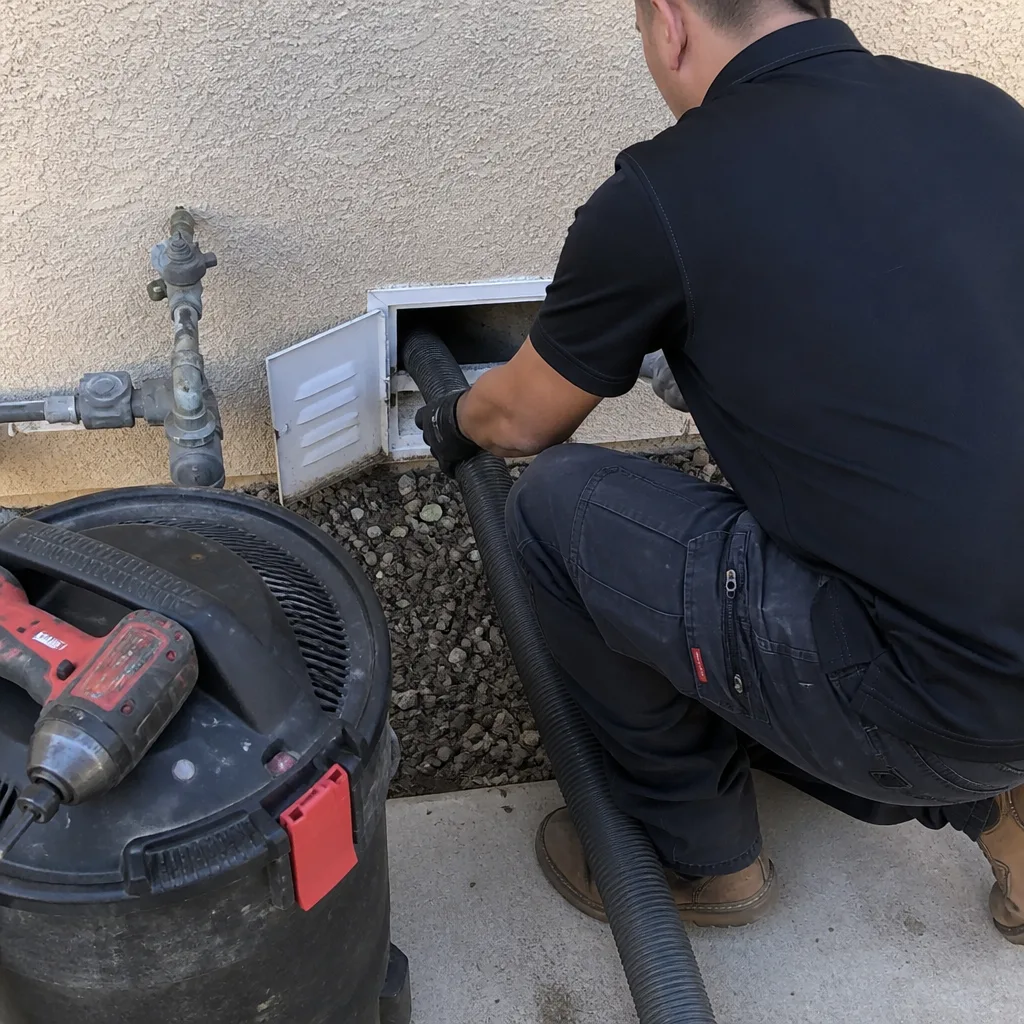
The practical rule: whenever you check your HVAC filter monthly, glance at the dryer lint trap area at the same time. If you’re pulling a full lint screen from every load, or if the dryer is taking longer than it used to, that’s your signal. Dryer Vent Cleaning in Riverside is typically recommended annually for households with heavy laundry use, which describes most families with kids and pets. A professional vent cleaning with equipment like the Rotobrush system removes the lint that a vacuum hose from the hardware store simply can’t reach, especially in the long horizontal runs common in single-story Riverside homes.
Filter Types and MERV Ratings for Riverside Air
Filter selection in Riverside deserves more thought than most homeowners give it. The MERV scale (Minimum Efficiency Reporting Value) runs from 1 to 20, and higher is not always better. A filter that’s too restrictive for your system creates the same problems as a dirty filter: restricted airflow, blower strain, and dust bypassing the filter through gaps.
Here’s what we recommend for most Riverside homes, based on what we see in the field:
- MERV 8, pleated, one or two inches thick: The right everyday filter for most homes with standard HVAC equipment. It captures the majority of household dust, pet dander, and pollen without over-restricting airflow. Good for homes without allergies or respiratory sensitivities.
- MERV 11, pleated: The upgrade we suggest for families with pets, homes near open space where grass and brush pollen blow through during spring, and anyone living in Riverside’s older neighborhoods where dust infiltration is a constant. Still fine for most systems.
- MERV 13, pleated: The filter for fire season. If you’re running the fan during wildfire smoke events, a MERV 13 filter captures the fine particulate that MERV 8 lets through. However, check your system’s static pressure tolerance before running a MERV 13 year-round. Some older blowers struggle.
- Washable filters: We don’t recommend them. The gap between the filter frame and the filter slot lets air bypass the media, and the filtering efficiency drops off quickly after each wash. Spend the money on a quality disposable.
- One-inch vs. four-inch media cabinets: If your home has a four-inch filter cabinet, use the thicker filter. More surface area means better filtration with less airflow restriction. Many Riverside homes built in the last fifteen years have these.
The brand matters less than the fit. A premium filter that doesn’t seal properly in the slot is performing at a fraction of its rating. When you slide the filter in, it should fit snugly with no visible gaps at the edges. If you can wiggle it or see daylight around the frame, you need a different size or a filter slot gasket. After our Air Duct Cleaning services, our technicians check the filter fit as part of the service, because we’ve seen too many good systems undermined by a filter that’s half an inch too small.
Three Findings That Mean Stop and Call Now
Most of what you’ll find during these checks falls under “note it and keep monitoring.” But there are three findings that should end your DIY maintenance and put a phone call at the top of your list.
1. Visible mold growth at more than one register or return. If you see black, green, or brown fungal growth at two or more locations, you have a moisture problem inside the system that will not resolve on its own. Every day it goes unaddressed, the growth spreads further. This is not a filter problem or a cleaning frequency problem. It’s a moisture source problem, and it needs a professional diagnosis.
2. A sudden, unexplained increase in household dust that coincides with a specific event. Did you just finish a renovation? Did a section of the ceiling get opened up for a repair? Did you have a water leak that soaked into drywall? Renovation dust (drywall dust, specifically) is fine enough to pass through most filters and heavy enough to settle inside ducts and then redeposit into your living space for months afterward. If you can trace a dust problem to a construction event, you’re not dealing with routine buildup. You’re dealing with a contaminant load that needs removal.
3. Airflow changes that persist after filter replacement and register cleaning. If one room is consistently warmer or cooler than the rest, if you’ve cleaned the registers and replaced the filter and the airflow is still weak, you may have a duct that’s disconnected, crushed, or collapsed. This affects both comfort and system efficiency, and it’s not something you can diagnose from the register opening. It requires professional equipment and access, which is where a company like Mortons Air Duct Riverside home service comes in. We’ve built our reputation in Riverside on finding exactly these kinds of problems and fixing them without drama.
None of these three situations get better with time. Each one compounds. The dirtier the system, the more air bypasses the filter. The wetter the ducts, the more mold grows. The longer a duct is disconnected, the more energy is wasted heating or cooling the crawlspace. When you see one of these three patterns, stop the monthly monitoring and make the call.
What Professional Duct Cleaning Actually Involves
When you do decide it’s time for a professional cleaning, it helps to know what should happen on the day of service. Most homeowners have never seen the inside of their supply ducts, and the process remains somewhat mysterious. Here’s the straightforward version.
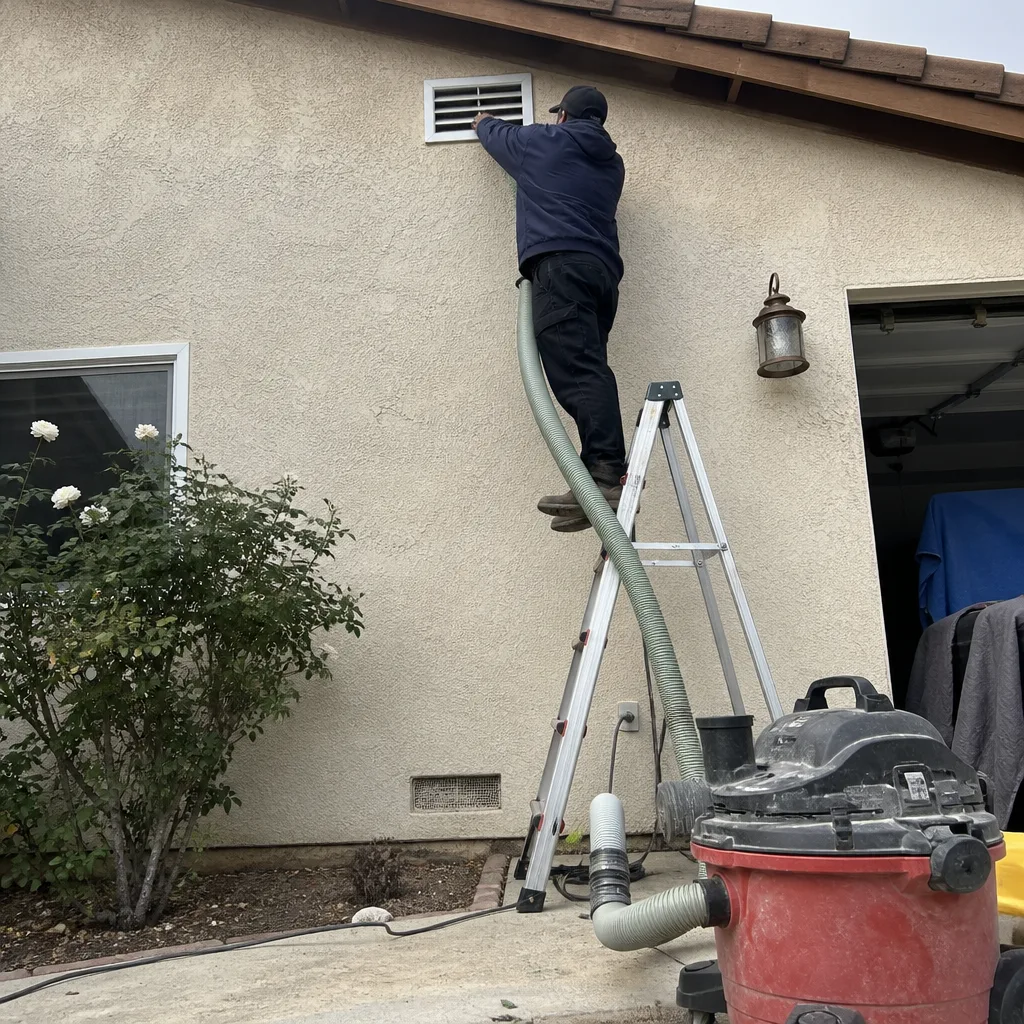
A proper cleaning involves connecting a high-powered vacuum to the duct system to create negative pressure, then agitating the duct walls to dislodge the dust that has adhered to them. The agitation is the critical step. Vacuum alone removes loose debris. Agitation removes the buildup. At Mortons Air Duct Riverside, we use professional-grade equipment from trusted brands like Rotobrush and Nikro, and we follow Air Duct Cleaning Permits, Codes & Inspections in CA: What You Need to Know. Rotobrush’s rotating brush system scrubs the duct walls while the vacuum captures what’s removed. Nikro’s HEPA-filtered vacuums ensure that what’s pulled out of your ducts stays out of your living space. These are commercial systems, not the equipment you rent from a hardware store. That distinction matters in older Riverside homes where decades of dust may be packed onto the duct surfaces.
Before any work begins, you should have a written price in hand. That’s our policy on every job, and it’s a reasonable expectation from any contractor. You should know what’s included, what’s not, and exactly what the total will be. No per-vent pricing games, no bait-and-switch. If a company can’t give you a firm number before starting, that’s a red flag. During the service, our technicians wear shoe covers and lay down drop cloths to protect your floors. After the work is done and the cleanup is complete, we take a photo of the finished work before we leave, so you have visual proof that the job was done and the house was left the way we found it.
How Often Should You Really Clean Your Air Ducts in Riverside?
The honest answer: it depends on your house, your household, and your habits. The National Air Duct Cleaners Association recommends every 3 to 5 years for most homes. That’s a useful baseline, but Riverside’s particular conditions push things in certain directions.
Homes that should lean toward the 3-year end of the range include:
- Homes with two or more indoor pets. Pet dander is fine and sticky, and it clings to duct walls where vacuuming alone won’t fully remove it.
- Homes where windows are open regularly during spring and fall. Riverside’s mild weather invites open-window living, and open windows invite dust that your filter then has to catch.
- Homes near the canyon areas and open hillsides, where wind-driven dust and brush pollen are seasonal constants.
- Homes that underwent renovation or remodeling in the past year, especially anything involving drywall work.
- Homes with residents who have allergies or respiratory conditions. A cleaner duct system means fewer airborne irritants circulating through living spaces.
Homes that can reasonably go 5 years include single-occupant households with no pets, homes with closed windows and a well-maintained filtration system, and homes where professional cleaning was done recently. If you’re unsure where your home falls, the monthly filter check will tell you. If you’re replacing a MERV 8 filter every three weeks and it still looks saturated, the system is doing its job poorly because the ducts are carrying a load that no filter can handle.
A Seasonal Calendar for Riverside Homeowners
Riverside’s climate doesn’t follow the four-seasons model that most generic maintenance guides assume. Our seasonal rhythm is different, and the checklist should match it.
Spring (March – May): This is wind season, when the Santa Anas and spring gusts push dust into homes. Check filters weekly during heavy wind events. Do your quarterly register walkthrough in late spring, after the winds settle. This is the time when we see the highest volume of dust accumulating at return grilles.
Summer (June – August): High heat means the AC runs constantly, which means the system is moving air and filtering continuously. The good news: a running system captures more dust. The bad news: a loaded filter restricts airflow exactly when you need cooling most. Check filters every three weeks during peak summer, especially if your system runs 12 hours a day.
Fall (September – November): Fire season. If there are active fires in the region, run the fan with a MERV 11 or 13 filter to scrub the air. After the smoke clears, check the filter and expect it to be dark. If you can smell smoke in the house, that’s not a duct problem. That’s a leak in the building envelope, and it belongs on a different to-do list.
Winter (December – February): When the heater runs, dust that settled in the supply ducts during the cooling season gets dried, baked, and sometimes pushed out. This is when homeowners often notice a burning smell from vents during the first few heating cycles, which is often just accumulated dust burning off a hot heat exchanger. If the smell persists beyond a few cycles, have the system inspected. Winter is also the best time to schedule a professional cleaning, because the HVAC workload is lighter and your system gets a clean start before the next cooling season.
See the difference
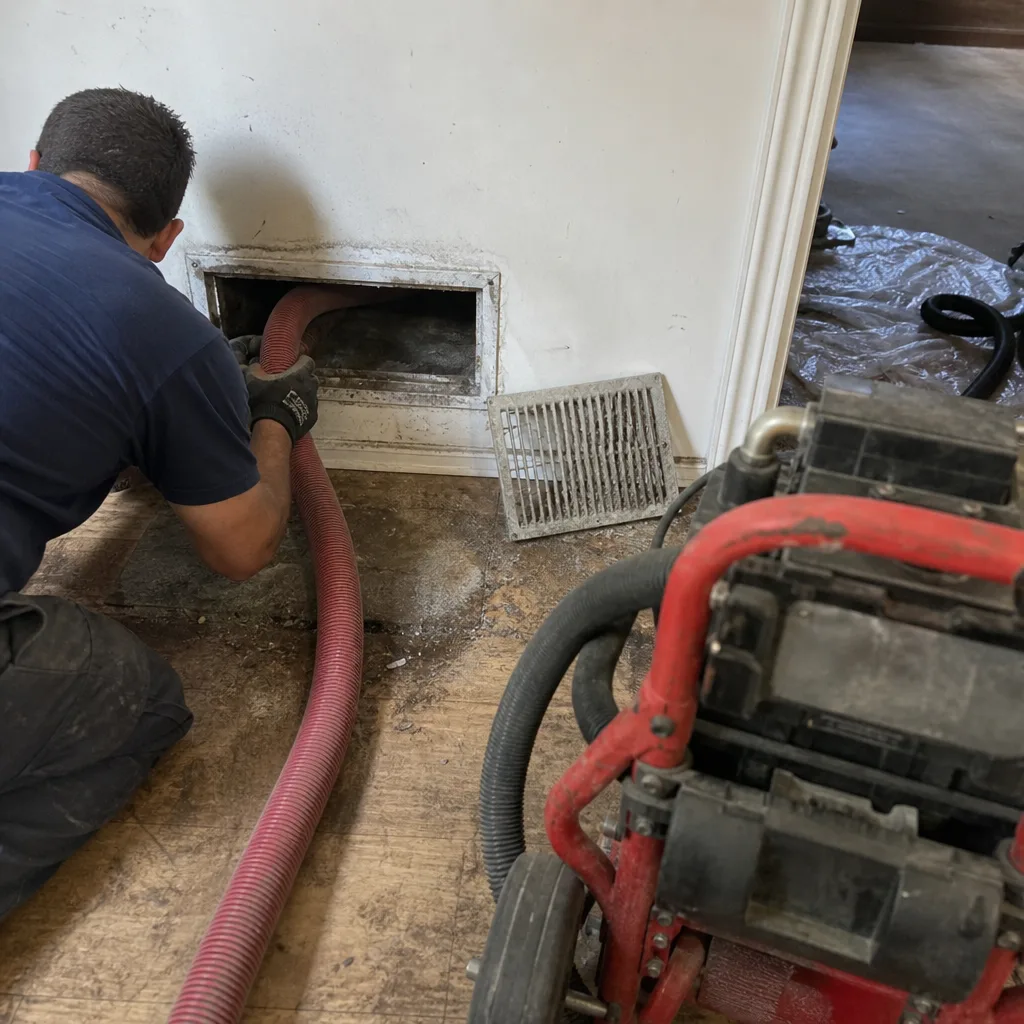 Before
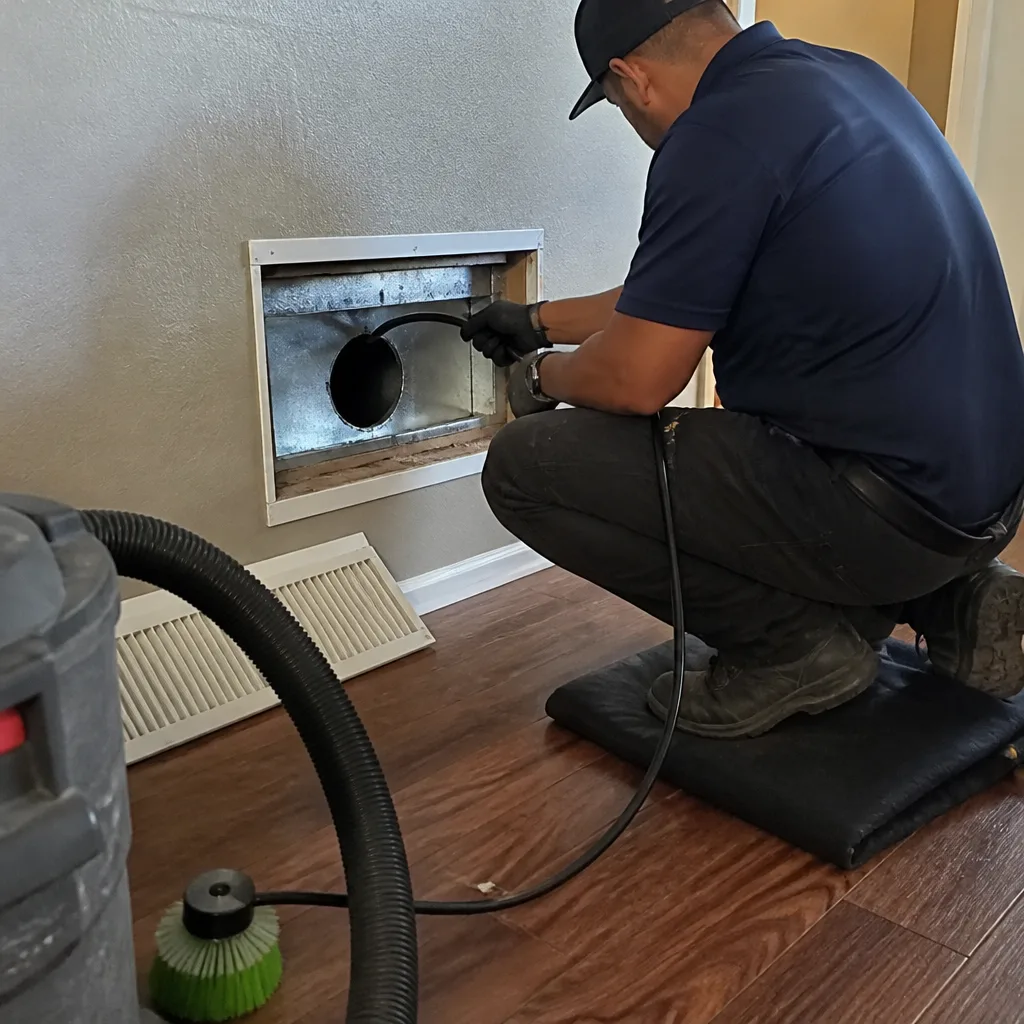 After
After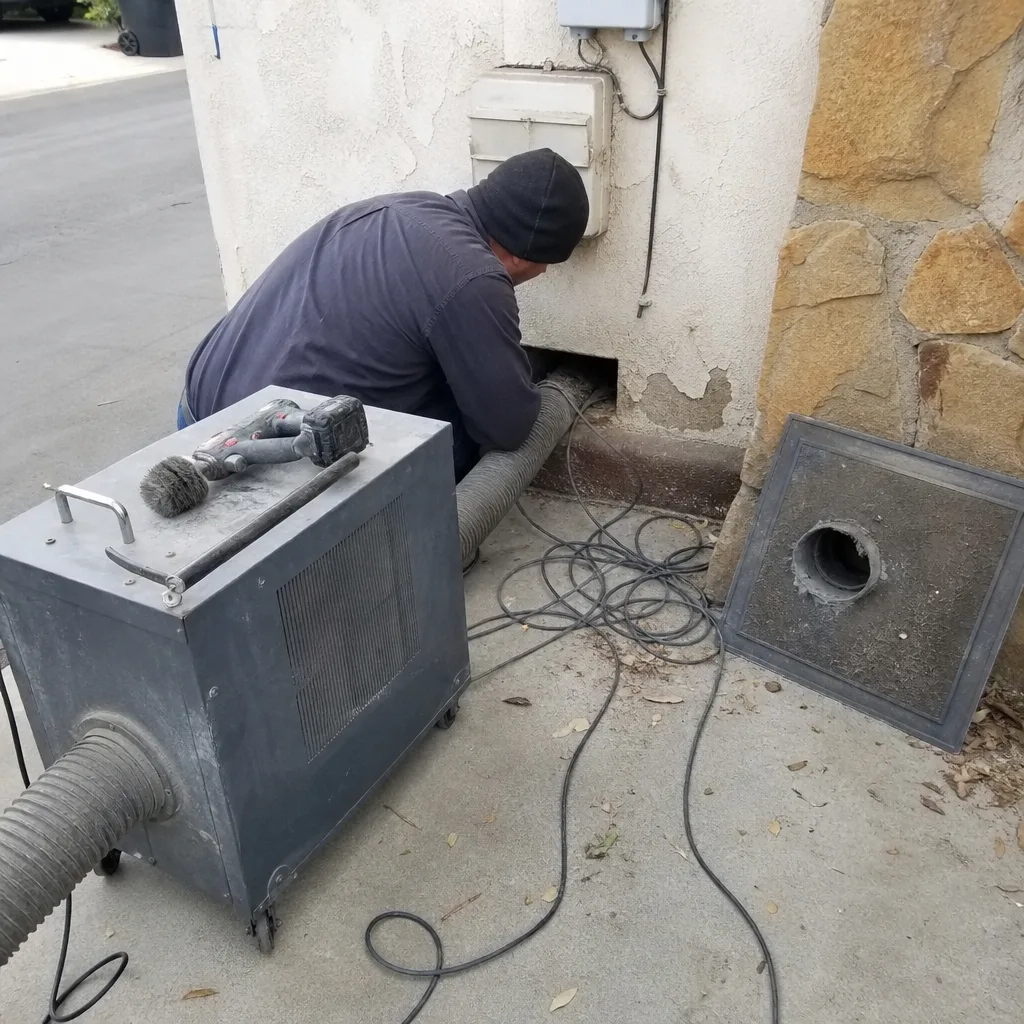 Before
 After
After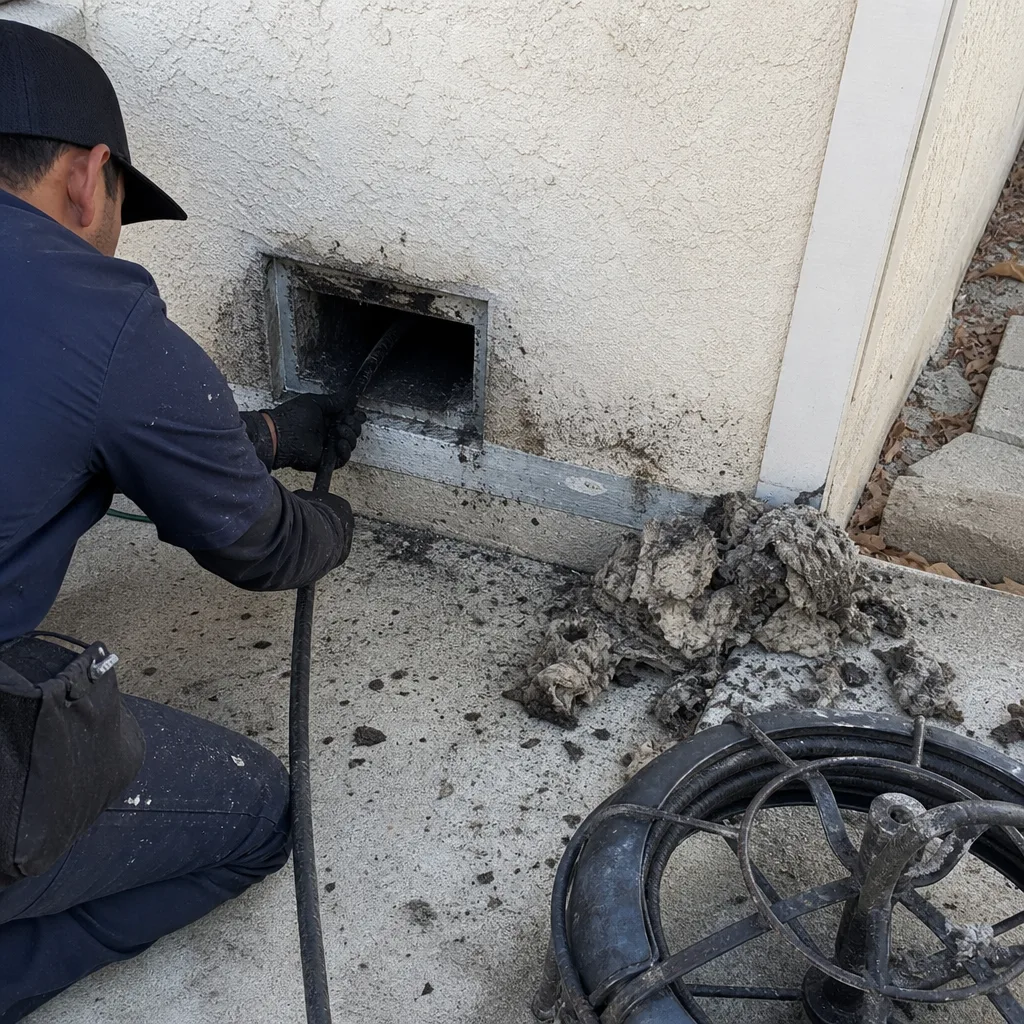 Before
 After
AfterRenters vs. Homeowners: What You Control
A note for the renters of Riverside, and there are many of them: you don’t own the ductwork, but you still breathe the air. Your maintenance responsibilities are narrower, but they still matter. Change the filter if your lease assigns that responsibility to you. Report visible mold or moisture from registers to your landlord in writing, with photos. You can wipe registers and keep furniture from blocking airflow. If your landlord won’t address a real problem, you can have the issue documented with a professional assessment, which sometimes motivates action. Don’t live with mold because you don’t own the walls. You still own your lungs.
Common Mistakes to Avoid
- Thinking a dirty filter means the filter is failing. A dirty filter means the filter is working. The problem is leaving it in place too long. When a filter is saturated, it stops filtering and starts restricting. Change it, don’t resent it.
- Buying the highest MERV filter available and calling it done. A MERV 16 filter in a system designed for MERV 8 is like putting a racing air intake on a minivan. You’ll choke the airflow, strain the blower, and end up with dust bypassing the filter through gaps. Match the filter to the system.
- Closing registers in unused rooms to save energy. This is the mistake that surprises most Riverside homeowners. Closing registers increases static pressure in the duct system, which forces air through remaining gaps and can actually increase energy use. Your system was balanced with all registers open. Leave them open.
- Ignoring the dryer vent because “it’s not HVAC.” The dryer vent is the most overlooked source of household particulate matter. A clogged vent pushes lint-laden air into the laundry room, and that air migrates through the house and into the HVAC returns.
- Using household cleaners to spray into registers. Spraying anything into a duct opening is a bad idea. The moisture stays in the ductwork, and moisture is the enemy. Wipe the register covers with a damp cloth, but don’t spray or douse anything into the opening.
- Waiting until you see a problem to act. By the time you see thick dust at register openings or smell something odd when the heater kicks on, the system has been underperforming for months. The monthly filter check exists so you catch problems before they become visible ones.
- Assuming all duct cleaning companies in Riverside are the same. The equipment, the process, and the thoroughness vary enormously. A company using a small portable vacuum and a brush is not providing the same service as a company using the professional-grade systems from Rotobrush and Nikro. Ask about equipment before you book.
When to Call a Professional
Call a professional when you see mold at multiple registers, when you trace a persistent dust problem to a renovation or water event, or when airflow issues persist after you’ve replaced the filter and cleaned the registers. Also call if you’re approaching the 3 to 5 year mark since the last cleaning and you want a baseline established. A good service call should begin with a written price, not a sales pitch. Mortons Air Duct Riverside offers free estimates in Riverside and the surrounding area. Call (350) 240-5513 and a live person will answer, any hour. No voicemail maze, no chatbot. You’ll get a straight answer about what we’ll do, how we’ll protect your home while we’re there, and what it will cost before we start.
Frequently Asked Questions
Air duct cleaning in Riverside typically costs between $300 and $600 for an average single-family home, depending on the number of systems, the size of the home, and the level of buildup. At Mortons Air Duct Riverside, you get one written flat price per system before any work begins, so the number you’re quoted is the number you’ll pay. For an exact quote based on your home, call (350) 240-5513.
The reliable indicators are visible dust buildup at register openings, dust shadows forming on walls near registers, a persistent musty odor when the system runs, visible mold growth inside the ducts or at the register faces, and an unusual amount of household dust accumulating on surfaces between cleanings. If you’re seeing any of these, it’s time for a professional assessment rather than continued monitoring.
When one Riverside duct cleaning quote comes in far below the rest, it usually means the company is using entry-level equipment, working with a smaller crew, or pricing a basic vacuuming job rather than a full agitation-and-vacuum cleaning. The cheaper service often skips the agitation step that actually removes buildup from duct walls. Before you book any company, ask what equipment they use. The difference between a portable vacuum and a professional Rotobrush or Nikro system is the difference between moving dust around and actually removing it.
Ask for before-and-after photos of the ductwork, specifically of the areas that showed buildup before the cleaning. At Mortons Air Duct Riverside, we provide a photo of the work and the cleanup before we leave every job. You should never have to wonder whether what you paid for actually happened in the spaces you can’t see.
For most Riverside homes, professional air duct cleaning every 3 to 5 years is the right interval. Homes with multiple pets, smokers, recent renovation dust, or residents with allergies should lean toward the 3-year mark. The best way to know if you’re due sooner is to check your filter monthly: if a MERV 8 filter is loading up in under a month, the system is working with a dirt load that deserves professional attention.
You can clean the register covers and the first few inches of visible duct opening, and you should do that quarterly. But the vast majority of ductwork is beyond the reach of any homeowner tool. The ducts run through walls, attics, and crawl spaces, and proper cleaning requires professional negative-pressure equipment and agitation tools. Attempting a deep clean with a household vacuum is more likely to disturb dust and spread it through the house than to remove it. This is one of those jobs where a professional pays for themselves on the first visit. For more guides & resources, explore our blog.
Riverside’s air carries fine desert dust, agricultural particulate from surrounding areas, pollen from the canyons and open hillsides, and during fire season, smoke particulate that can travel hundreds of miles. That load lands in your home through windows, doors, and ventilation, and your HVAC system is the first line of defense. A well-maintained filter system captures a large portion of it, but what gets past the filter settles in the ducts and recirculates. This is why Riverside homes tend to need filter changes and professional cleanings more frequently than coastal homes.
The Bottom Line
A duct maintenance routine doesn’t need to be complicated. Check the filter monthly. Walk the registers quarterly. Do the deeper home review annually. Pay attention to what you see, and call a professional when the visual signals change. The goal is simple: catch small problems early, keep the system running efficiently, and protect the air your family breathes every day. A Riverside home with a clean duct system doesn’t just smell better and feel more comfortable. It runs more efficiently, lasts longer, and gives you one less thing to think about. And when the time comes for a professional cleaning, you’ll already know what the house needs and what questions to ask before anyone touches a single vent.
Written by Paul Adeyemi, Owner at Mortons Air Duct Riverside, serving Riverside since 2005.