
Last updated October 15, 2026
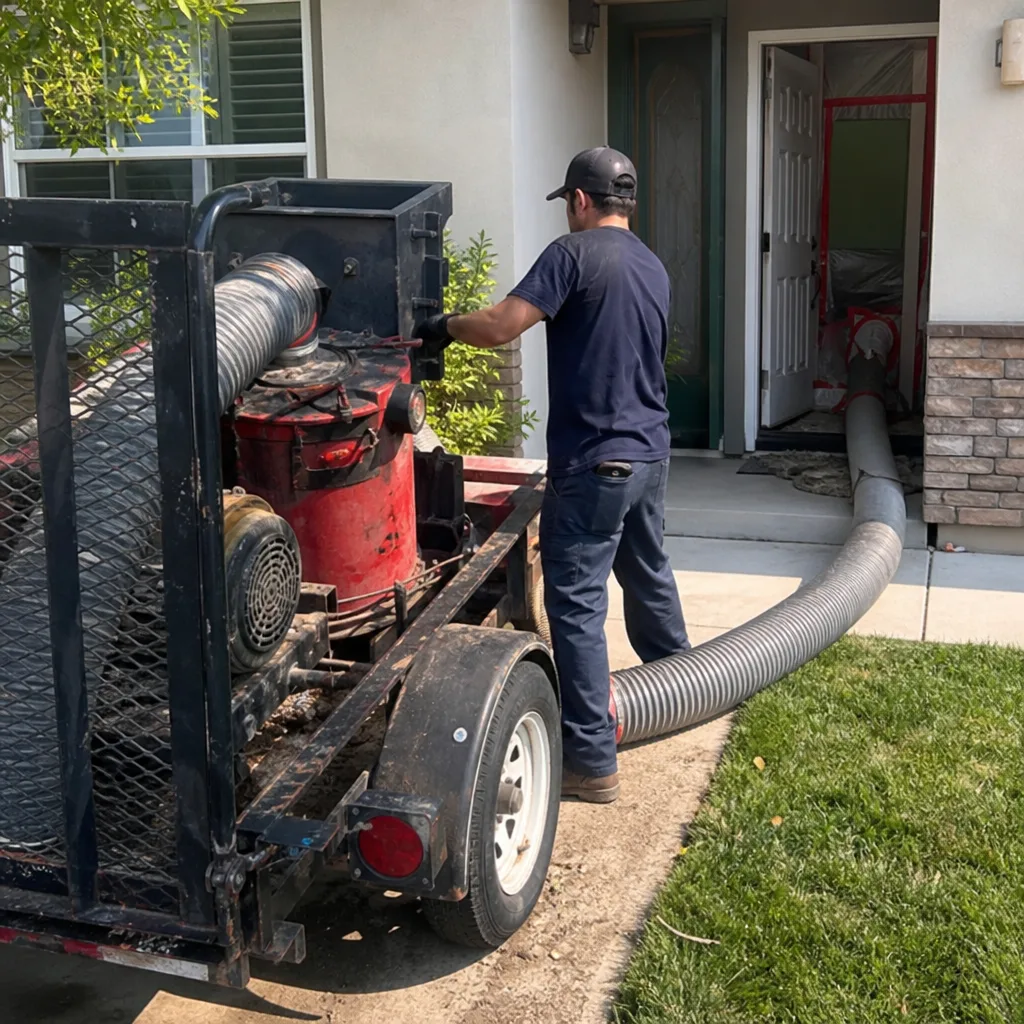
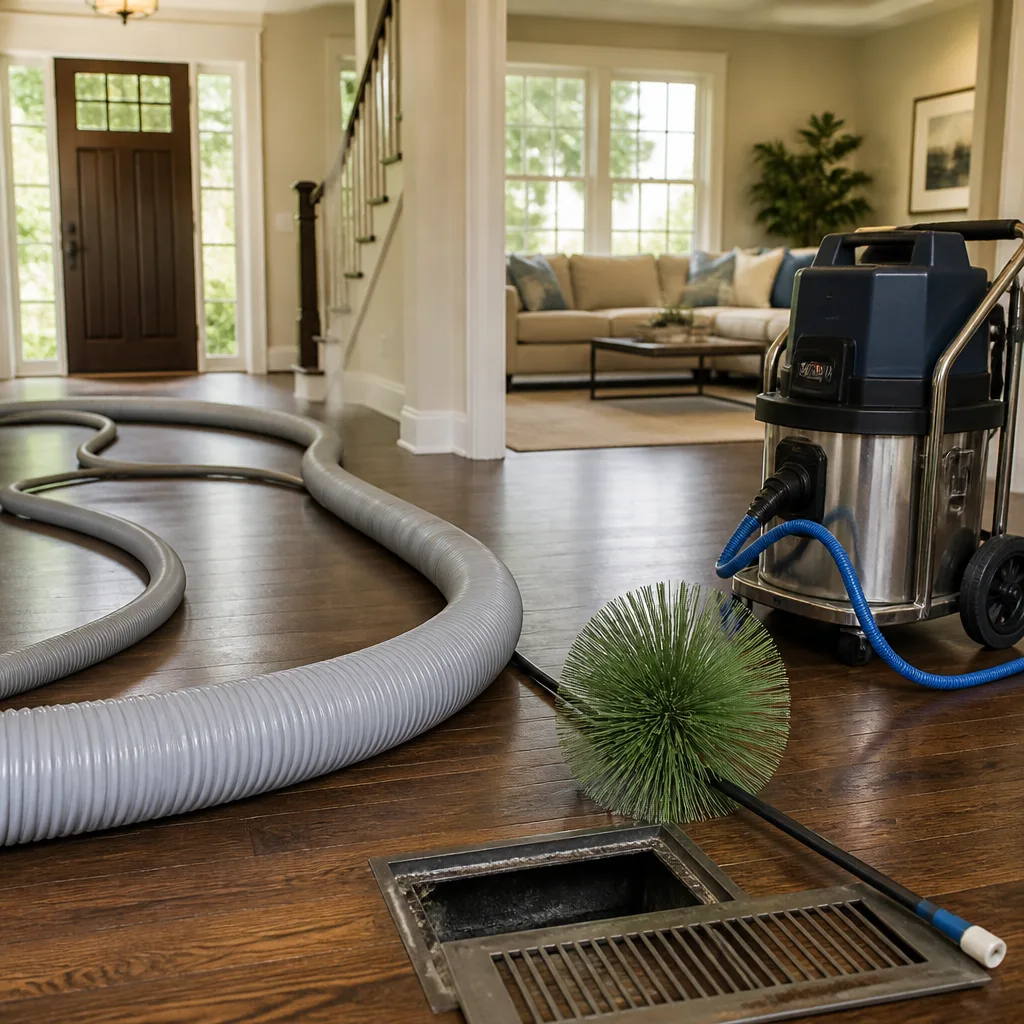 Whole-home duct cleaning
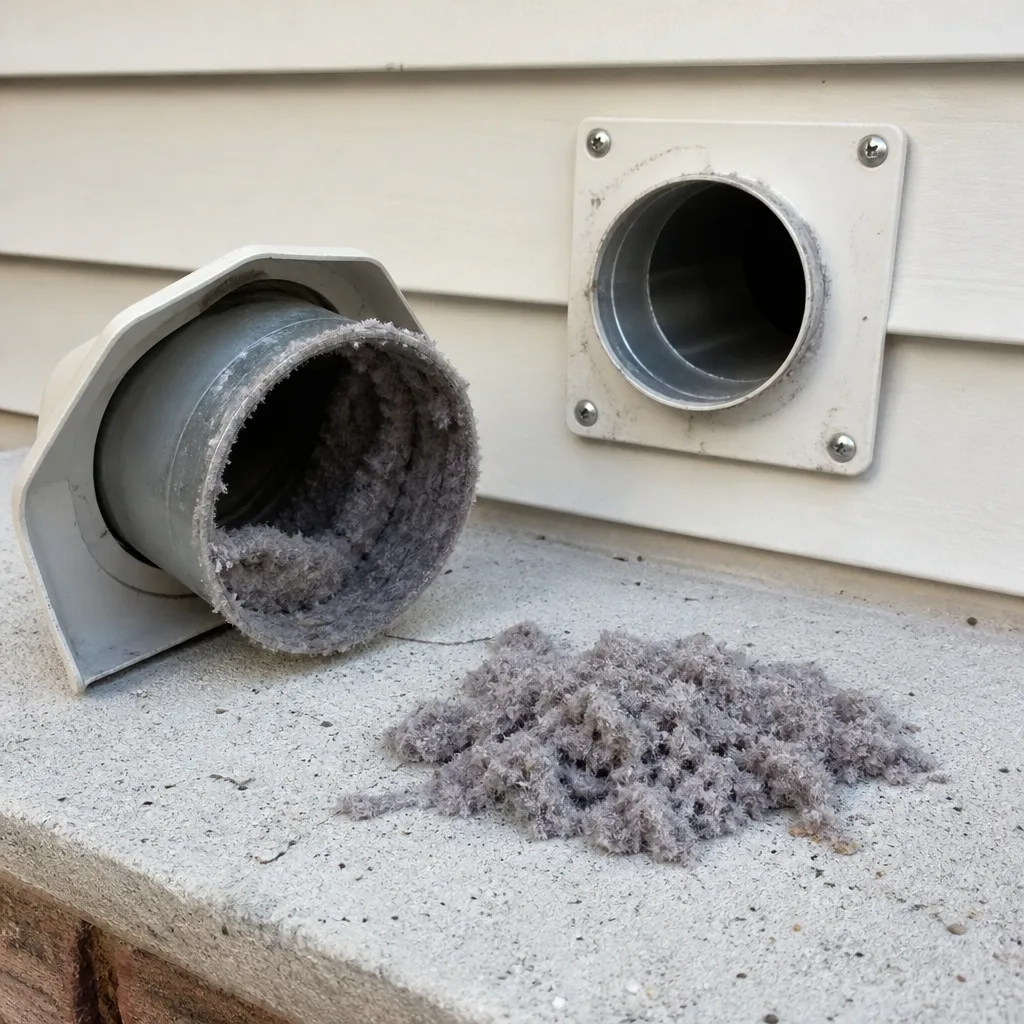 Dryer vent cleaning
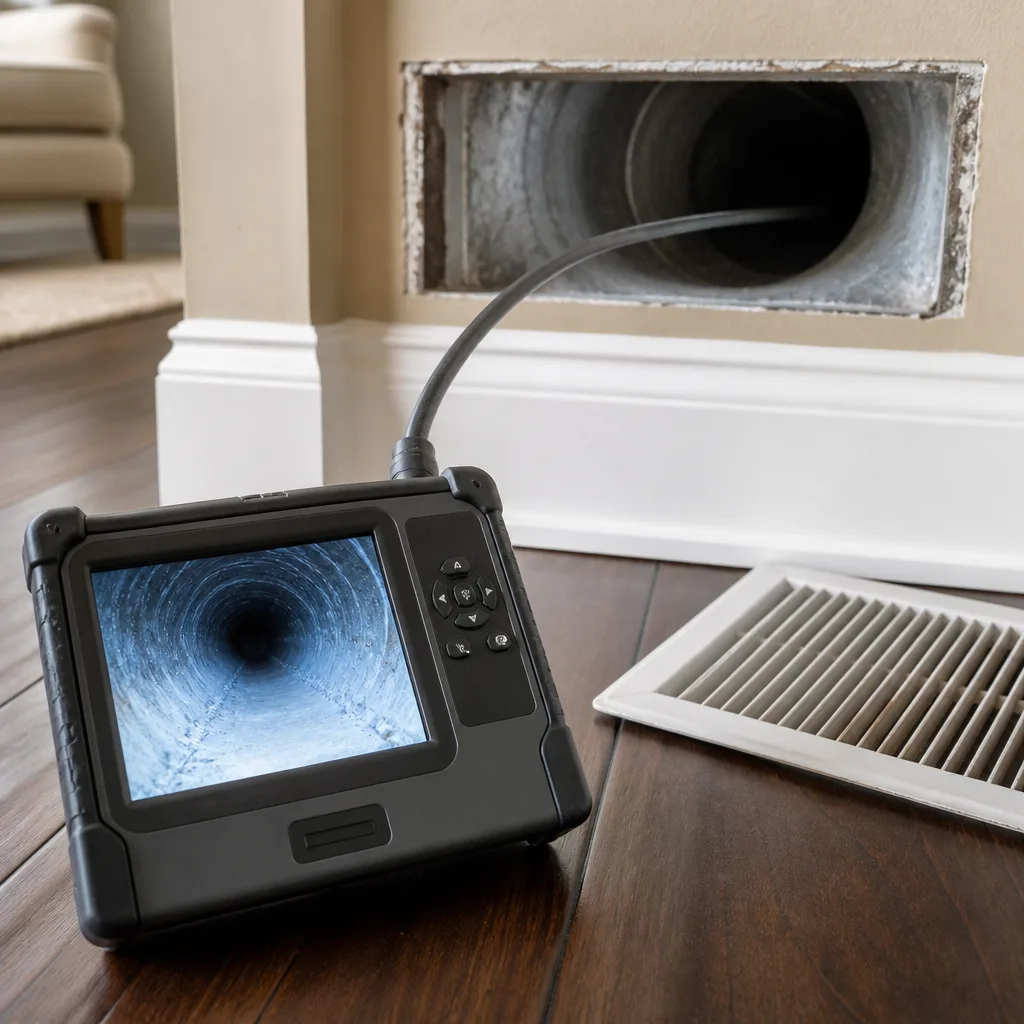 Camera inspection
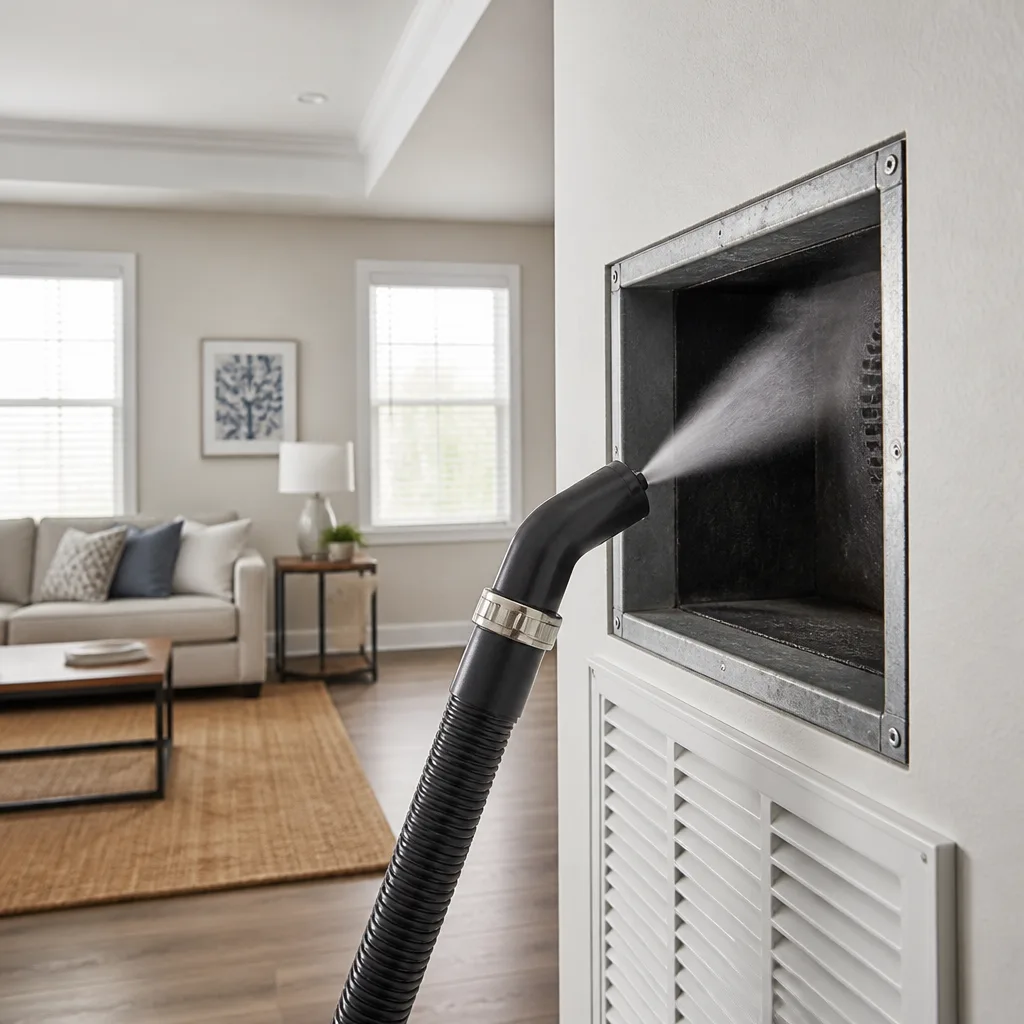 Sanitizing & deodorizing
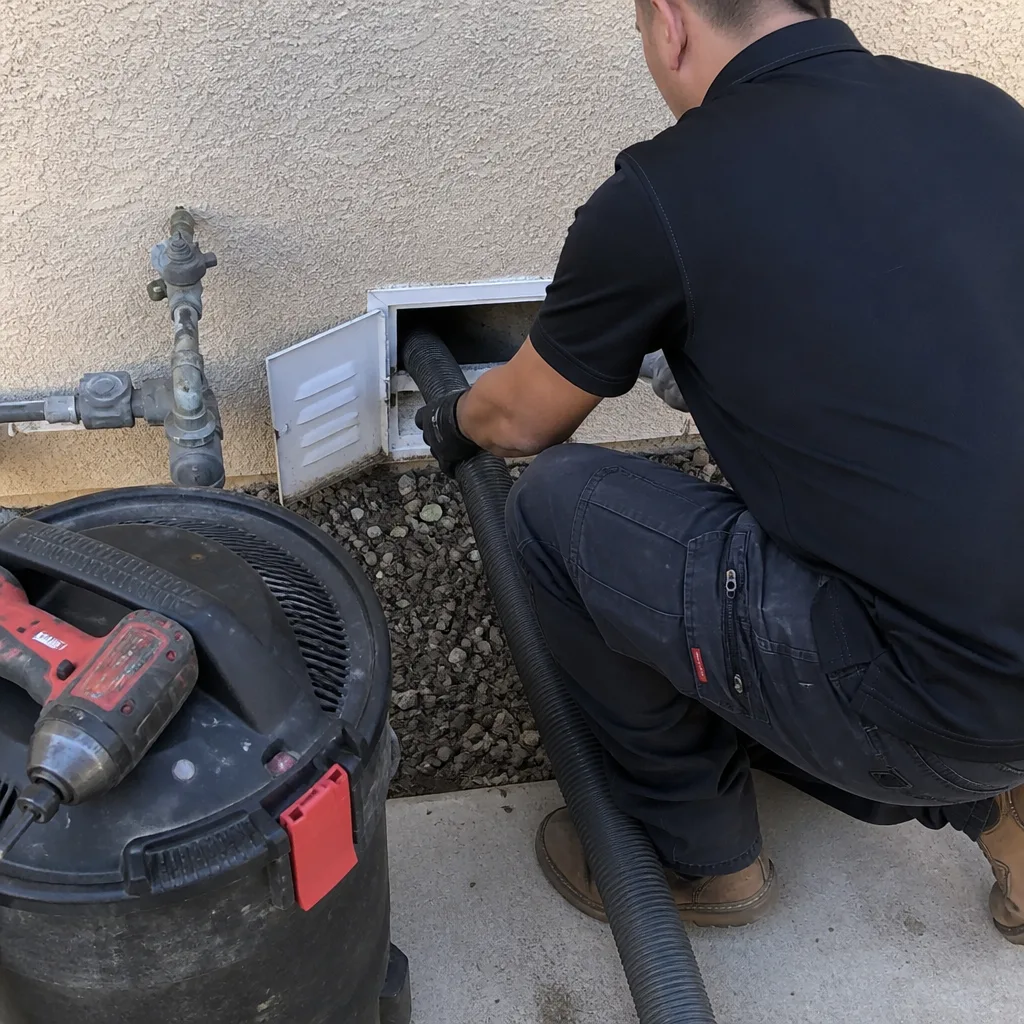
Whole-system duct and dryer vent check with before-and-after photos - you see exactly what came out of your vents
That "$99 whole-house special" is a bait ad - the real number appears once they are in your hallway, or the "clean" is a shop-vac at the register. We photograph the inside of your ducts before and after instead.
Seasonal Air Duct Cleaning Care for Riverside: Year-Round Homeowner’s Guide
Most Riverside homeowners run their HVAC system for more cumulative hours per year than a Chicago or Seattle household – and that runtime difference, compounded across years, means Riverside ducts accumulate debris on a faster clock than national cleaning-frequency guidelines assume. The result is that a family in the Wood Streets or Canyon Crest neighborhoods may need duct care on a different rhythm than a cousin in the Midwest, and this guide maps that rhythm precisely. You’ll learn what to check during each distinct Riverside season, why wildfire smoke behaves differently inside ductwork than ordinary household dust, and when Air Duct Cleaning services genuinely pay for themselves. This is the seasonal care calendar we’ve developed from nearly two decades of working inside Riverside homes.
Quick Answer
Riverside’s seasonal rhythm runs on four distinct cycles – wildfire smoke season (summer through fall), Santa Ana wind season (October through January), high-pollen spring (February through April), and a punishing summer heat stretch that pushes HVAC systems harder than almost anywhere in California. Each cycle deposits a different kind of debris in your ducts, and a practical year-round plan means checking or cleaning specific components in April, October, and during any extended smoke event. Most Riverside homes benefit from professional duct cleaning every 2 to 3 years, with dryer vent cleaning on a stricter annual schedule. For a detailed seasonal breakdown, see our Air Duct Cleaning Maintenance Checklist for Riverside Homeowners.
Styles & brands we work with
Table of Contents
- Riverside’s Real Seasons: Why the National Calendar Doesn’t Apply
- Wildfire Smoke and Your Ductwork: What Makes It Different
- Santa Ana Winds: October Through January
- Spring Pollen Season: February Through April
- The Pre-Summer HVAC Startup: Why Late April Matters
- Evaporative Coolers and Duct Moisture: A Riverside Combination
- What Families with Infants or Compromised Immune Systems Should Prioritize
- Common Mistakes to Avoid
- When to Call a Professional
- Frequently Asked Questions
Riverside’s Real Seasons: Why the National Calendar Doesn’t Apply
Most duct cleaning advice online is written as if every American home experiences the same weather pattern: snowy winters, rainy springs, humid summers, crisp falls. Riverside doesn’t cooperate with that template. We get roughly 277 sunny days per year, summer temperatures that routinely cross 100°F in July and August, and an extended cooling season that can stretch from April through late October. The HVAC system in a typical Riverside house runs more hours annually than systems in most other U.S. cities, simply because the heat demands it.
That runtime matters because every hour of air circulation pulls more airborne particles through the duct system. In Riverside, the primary debris inputs aren’t dead leaves and fireplace soot – they’re fine desert dust, vehicle particulates from the 91 and 60 freeways, pollen from the region’s long growing season, and seasonal wildfire smoke. Understanding which of these inputs dominates each part of the year is the foundation of a sensible care routine.
Here’s the seasonal map we work from as a Riverside air duct cleaning company:
- February – April: Peak grass and tree pollen. Windows open during mild afternoons. HVAC in transition mode.
- May – July: First major heat stretch. System runs near-continuously. Dust accumulation peaks.
- August – October: Wildfire smoke season. Fine particulates and odor compounds enter ducts. Santa Ana wind season begins in October.
- November – January: Santa Ana winds persist. Dry, dusty air. HVAC cycles for heating. Debris settles in dormant sections.
Each of these windows has a specific, actionable step we’ll walk through below. None of them require panic – just attention at the right moment.
Wildfire Smoke and Your Ductwork: What Makes It Different
Wildfire smoke is not ordinary dust. The particles are dramatically smaller – often under 2.5 microns, which is why they’re classified as PM2.5 – and they carry volatile organic compounds that cling to surfaces rather than just sitting on them. When smoke from the Box Springs Mountain or San Bernardino National Forest fires blankets Riverside, your HVAC system pulls those particles through the return vents, and a portion of them settle inside the ductwork even if you replace your filter faithfully.
The difference shows up in specific ways. Smoke particles are fine enough to work into the porous surfaces of flex duct lining and accumulate on blower motor components. The odor compounds don’t simply blow out the other end – they adhere to dust already inside the ducts, which means a home that smelled smoky for three days can retain a faint smoke odor in the HVAC for months. That’s why a standard dust-only cleaning may leave a lingering smell even after the air outside clears.
In our experience in Riverside, the homes that recover cleanly from wildfire smoke season share two habits: they run their system on a medium fan setting during smoke events (which keeps air moving through the filter rather than letting particles settle inside the trunk line), and they schedule a duct inspection after the first major smoke event of the year. You don’t need to panic and have the system cleaned the day after every fire – but an inspection tells you whether smoke deposits are substantial enough to warrant it.
If you do schedule a cleaning after a smoke event, the equipment matters. We use professional-grade air sweep and HEPA-filtered vacuum systems from Rotobrush and Nikro that capture fine particulates rather than simply loosening them into the living space. It’s the difference between removing smoke residue and redistributing it.
Santa Ana Winds: October Through January
Santa Ana winds are Riverside’s most distinctive weather event – dry, warm, gusty air flowing down from the high desert through the Cajon Pass and the Santa Ana River corridor. The winds kick up fine dust, construction debris, and plant material across the Inland Empire. Riverside sits directly in that wind path, and the result is outdoor air that’s visibly hazy with suspended particles for days at a time.
During a Santa Ana event, the biggest ductwork vulnerability is infiltration. Homes with older duct systems may have small gaps at connection points, and sustained winds can push dust into those gaps even when the HVAC is off. The same winds dry out the soil, which means landscaping dust and dirt from the Arlington Heights and La Sierra areas travels farther and hangs in the air longer.
What to do during Santa Ana season:
- Check your filter weekly in October and November. You’ll see it darken visibly faster than in other months. A filter that’s normally good for 90 days may need replacement in 30.
- Inspect the return air register for dust buildup. This is the first place Santa Ana dust shows up, and a heavy accumulation there signals that the same dust is entering the duct system.
- Keep exterior vent covers closed and intact. A missing or damaged exterior vent cover during a wind event lets dust pour directly into a duct branch.
- Schedule a fall duct inspection after the first significant Santa Ana. October is the natural moment – before the holiday season means more indoor cooking, guests, and family time.
Most importantly, don’t assume the filter caught everything. The filter catches what passes through it, but dust that enters through a small duct gap bypasses the filter entirely. That’s the dust that settles in ducts and gets redistributed through the house on windy days for months afterward.
Spring Pollen Season: February Through April
Riverside’s spring arrives early. By mid-February, the trees and grasses in the area are already releasing pollen, and the mild afternoon temperatures mean Riverside families open their windows for fresh air. That combination – open windows plus active pollen – means a lot of pollen enters the home outside the HVAC system’s control.
However, pollen that does enter through the HVAC return path tends to be sticky. It clings to the filter first, then to the evaporator coil, then to the inside surfaces of supply ducts. In our experience cleaning Riverside ducts in spring, we regularly see pollen accumulation concentrated in the first few feet of supply line, closest to the air handler.
Spring duct care in Riverside looks like this:
- Upgrade to a MERV 11 or MERV 13 filter for March and April. These capture pollen and mold spore sized particles. Check the filter every two weeks during peak bloom.
- Run the system fan on “on” rather than “auto” during high-pollen days. Continuous air movement through a good filter removes more airborne pollen than intermittent cycles.
- Vacuum return vents and nearby surfaces weekly. Pollen collects in the same places you’d expect – right where the air enters the system.
- Wait to clean ducts until after the pollen peak. Cleaning in early February means another month of pollen hits the freshly cleaned system. Late April or early May is the strategic window in Riverside.
For homeowners with allergy concerns, a spring duct cleaning in Riverside is often the single most valuable service of the year. Removing months of accumulated pollen before summer’s sealed-window season means the air inside the house starts the hot months clean.
The Pre-Summer HVAC Startup: Why Late April Matters
Here’s the single highest-value insight in this guide: the last week of April is the most important moment on the Riverside duct care calendar. By late April, pollen season is winding down, the first truly hot stretch is approaching, and the system is about to shift from occasional use to near-continuous operation for the next five months.
Think of late April as the moment to reset the system before it works its hardest. What to check:
- Visible duct inspection at every accessible register. Look for dust accumulation, moisture stains, or any sign of pests. A flashlight is enough for a basic look.
- Filter replacement and housing check. Install a fresh filter before summer load, and make sure the filter housing seals tightly. A gap half an inch wide lets unfiltered air bypass the filter all summer.
- Condensate line and drain pan inspection. In Riverside’s dry climate, condensate issues are less common than in humid regions, but they do happen during the humid late-summer weeks. A clogged line means water backs up and creates the moisture that lets mold establish inside ducts.
- Schedule professional duct cleaning if the last one was more than 2 – 3 years ago. This is the strategic moment to do it – after pollen season, before summer load. Clean ducts going into June mean the air you’re breathing during closed-window summer months isn’t circulating through accumulated debris.
Riverside’s summer puts an unusual demand on cooling systems. When outdoor temperatures hit 105°F, the system cycles frequently, and any restriction – including dust buildup in ducts and coils – forces the system to work harder for the same cooling output. That shows up in energy bills and in how quickly the house cools down after the thermostat is adjusted.
Evaporative Coolers and Duct Moisture: A Riverside Combination
A notable percentage of Riverside homes supplement central HVAC with evaporative coolers – swamp coolers – especially in older homes in the downtown and Eastside neighborhoods and in homes where the central system was added decades after the house was built. Evaporative cooling makes sense in our dry climate: it’s energy-efficient and works well during the low-humidity months.
But evaporative coolers create a specific moisture and debris combination in ductwork that deserves attention. Swamp coolers add humidity to the air they push through the home. When that moist air passes through ductwork that already contains dust (which is most ductwork), the dust absorbs the moisture and becomes heavier and stickier. Over time, that creates a thin coating on duct surfaces that captures more debris than dry ducts would.
If your Riverside home uses an evaporative cooler, even seasonally, here’s what we recommend:
- Schedule the swamp cooler service and the duct inspection together. The transition between cooler and central system use is the natural moment to check duct condition.
- Run the central system fan for 30 – 60 minutes after swamp cooler season ends. This dries out any residual moisture in the supply lines before the system sits unused.
- Be alert to any musty odor when you first switch to swamp cooler mode in spring. A musty smell means the moisture is already interacting with accumulated dust. That’s a signal to schedule a cleaning before running the cooler further.
This is a Riverside issue that national guides never mention. The combination is common enough in the Inland Empire that we recognize the pattern immediately, and it’s exactly the kind of local detail that changes what “seasonal care” means in practice.
What Families with Infants or Compromised Immune Systems Should Prioritize
We clean ducts in plenty of Riverside homes where there’s a baby napping in the next room or a family member with respiratory sensitivities. Those households rightly think about air quality differently, and the seasonal care plan for those homes should be more proactive at the start of each high-pollution season.
The practical priorities, season by season:
- Before wildfire smoke season (August): Have the duct system inspected and cleaned if it hasn’t been done in the past two years. Freshly cleaned ductwork accumulates less of the fine PM2.5 particles that matter most for small lungs, because there’s less existing dust to catch them.
- Before Santa Ana wind season (October): Replace the filter with a MERV 13, even if you normally use a lower rating. Confirm that all duct register connections are sealed in the rooms where the infant sleeps and where the family spends most of the evening hours.
- Before pollen season (February): Same MERV 13 filter strategy, plus a once-over of return vents in bedrooms. Consider professional duct cleaning in late April if pollen was heavy and anyone in the household had symptoms.
- Year-round: Use a stand-alone HEPA air purifier in sleep areas if the duct system hasn’t been professionally cleaned in years. This isn’t a substitute for cleaning, but it’s a sensible interim measure.
We also recommend telling your duct cleaning company about the infant or the immune-compromised family member before the crew arrives. At Mortons Air Duct Riverside, that conversation causes us to choose specific containment approaches and to prioritize pet-safe, low-odor product choices where available. Our technicians already arrive in uniform with shoe covers and drop cloths as standard procedure, but knowing about a newborn in the house changes how carefully we coordinate the work around nap schedules and alert family members to equipment noise in specific rooms.
Common Mistakes to Avoid
- Following a national cleaning schedule. The “every 3 to 5 years” guidance is a national average that understates Riverside’s dust load. Our climate and runtime pattern argue for every 2 to 3 years, with the April inspection as the trigger.
- Only changing the filter during summer. Santa Ana season and pollen season each have their own peak debris moments. Checking the filter in October and March matters as much as checking it in July.
- Cleaning ducts at the wrong seasonal moment. A cleaning in February means the system gets another two months of pollen before summer. Wait for late April and get the full benefit of a clean system through the hottest, dustiest stretch.
- Trusting the filter to catch everything. The filter catches particles that pass through it. Dust entering through duct gaps, or settling inside the system when it’s off, is invisible to the filter. Only a professional cleaning addresses that accumulation.
- Ignoring the dryer vent in this conversation. Riverside’s dry climate makes an annual dryer vent cleaning in Riverside sensible, but the same Santa Ana dust and summer heat that affect ducts also affect dryer vent performance. Lint plus Riverside dust makes for a fast-blocked vent system.
- Waiting for a musty smell before acting. By the time odor is evident, the moisture and microbial issue inside the ductwork is likely established. A cleaning at that point is still worthwhile, but earlier action would have been simpler and cheaper.
When to Call a Professional
Some seasonal care tasks are DIY-friendly – checking filters, looking at visible registers, running the fan to dry the system. Others genuinely require professional equipment. Call a professional when you notice any of these: visible mold growth inside a duct or on a vent cover (dark, patchy, or fuzzy deposits); a persistent musty or smoky odor that returns after filter changes; dust buildup inside the ductwork that you can see from the register opening; a recent home renovation that produced construction dust; or a runtime pattern that suggests the system is fighting restrictions (longer cooling cycles, weak airflow from some vents, higher energy bills with no other explanation). All of these are signals that the system needs more than a filter swap.
Mortons Air Duct Riverside offers free estimates in Riverside – call (350) 240-5513 and a real person answers, 24/7. We’ll give you a written price before any work starts, and you’ll know exactly what to expect before the crew arrives.
Frequently Asked Questions
In Riverside, we recommend professional duct cleaning every 2 to 3 years for most homes, rather than the national average of 3 to 5 years. The difference comes down to runtime – Riverside HVAC systems run more hours per year than systems in cooler climates – plus local factors like Santa Ana dust, wildfire smoke, and a long pollen season. Homes with pets or multiple occupants may benefit from cleaning on the shorter end of that range. Call (350) 240-5513 for an exact recommendation based on your home’s specifics, and we’ll give you a written price before any work starts.
Low-price duct cleaning quotes in the Riverside market typically come from operators using small portable vacuums, not professional truck-mounted or HEPA-filtered negative air systems like the Rotobrush and Nikro equipment we run. A smaller machine can agitate dust and leave it in the living space, and the operator may quote a low per-vent price that multiplies into a higher final bill once the work is underway. We quote one flat price per system, agreed before we start, with no additions on the invoice. The written price is the price.
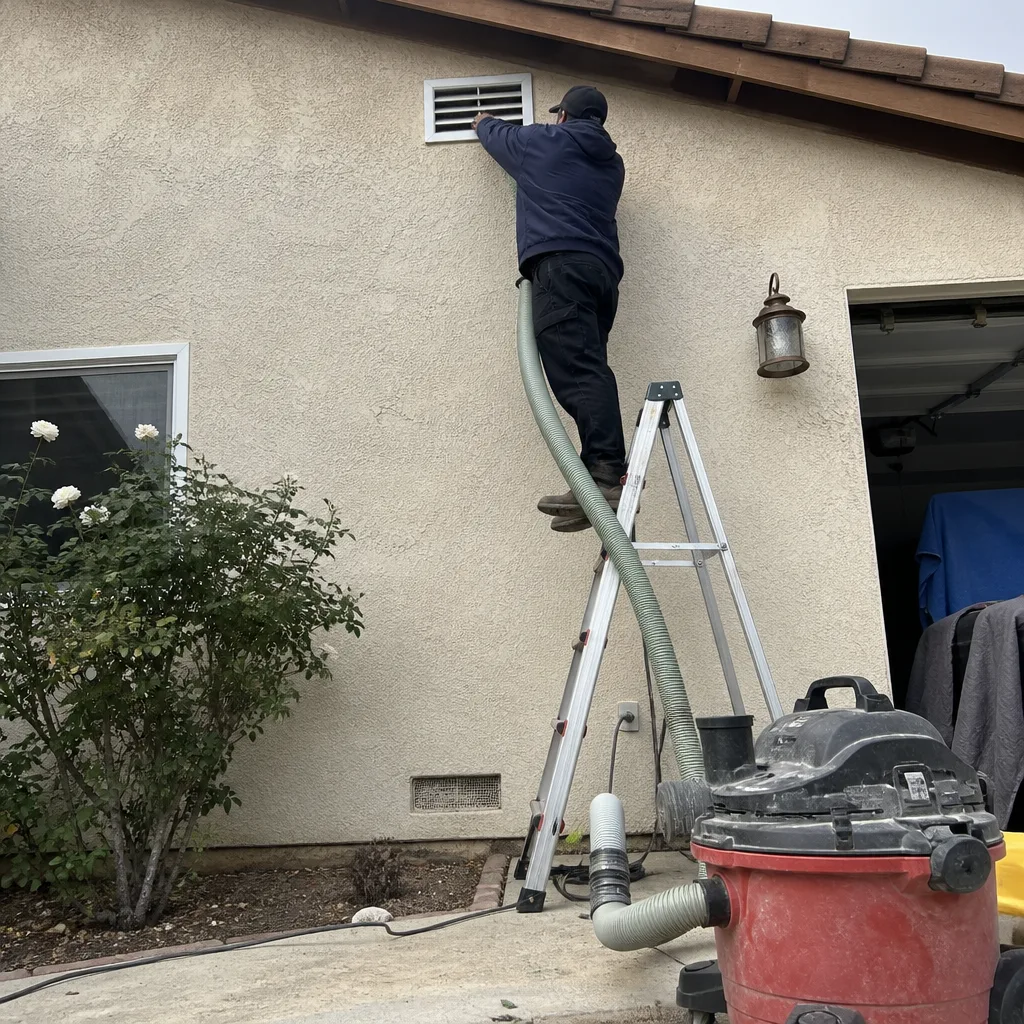
Ask for before-and-after photos of the ductwork’s interior. A legitimate professional cleaning produces visual documentation of the change, taken from inside the duct line rather than just pictures of the equipment sitting in the driveway. At Mortons Air Duct Riverside, every completed job includes a photo of the clean-up before the crew leaves – proof that your home was left better than we found it, not just a claim made over the phone. You can also ask to see a sample of what was removed from the ducts while the crew is still on site.
Not always. If your home was closed up during a smoke event and the filter was fresh, the ducts may have accumulated only a light dusting. An inspection after the first significant smoke event of the year tells you whether cleaning is warranted. However, if you ran the HVAC during smoky days or if smoke odor lingers for weeks after the outdoor air cleared, the smoke particulates have likely worked into the existing dust layer inside the ducts, and a cleaning is the most effective way to remove the odor source. Call (350) 240-5513 and we’ll inspect before recommending anything.
Late spring – the last week of April or first week of May – is the best time to clean ducts in Riverside. That timing captures the system after pollen season ends and before summer cooling load begins, so the clean ducts are working at their hardest during the most demanding months. Fall cleaning (October) is a reasonable second choice if you missed April, particularly before Santa Ana season hits its peak and before holiday indoor cooking and guests add more airborne particulate to the house. Avoid cleaning in February, which leaves freshly cleaned ducts exposed to another two months of heavy pollen.
Yes, with a specific condition: the benefit comes from removing accumulated pollen and dust that would otherwise recirculate through the home during the closed-window months of summer and winter. If you have seasonal allergy symptoms in Riverside, the pollen accumulating in spring is often a primary trigger, and removing that accumulation before summer means the HVAC system is no longer distributing last season’s pollen into the bedroom air. We recommend timing the cleaning for late April to maximize that benefit.
The Bottom Line
Riverside’s duct care calendar runs on the city’s own seasonal rhythm, not a national template. Santa Ana winds in fall push dust through every gap in the system. Wildfire smoke in late summer introduces fine particulates that behave differently than household dust. Spring pollen coats the inside of ductwork, and summer heat makes the system work hard enough to circulate whatever has accumulated. The highest-value move you can make is a late-April inspection and cleaning if it’s been more than two to three years. For more guides & resources on keeping your Riverside home’s air clean year-round, explore our blog. The second most valuable move is an October check after the first Santa Ana. Do those two things consistently, and your ducts will spend the majority of the year needing nothing from you at all.
Written by Paul Adeyemi, Owner at Mortons Air Duct Riverside, serving Riverside since 2005.
See the difference
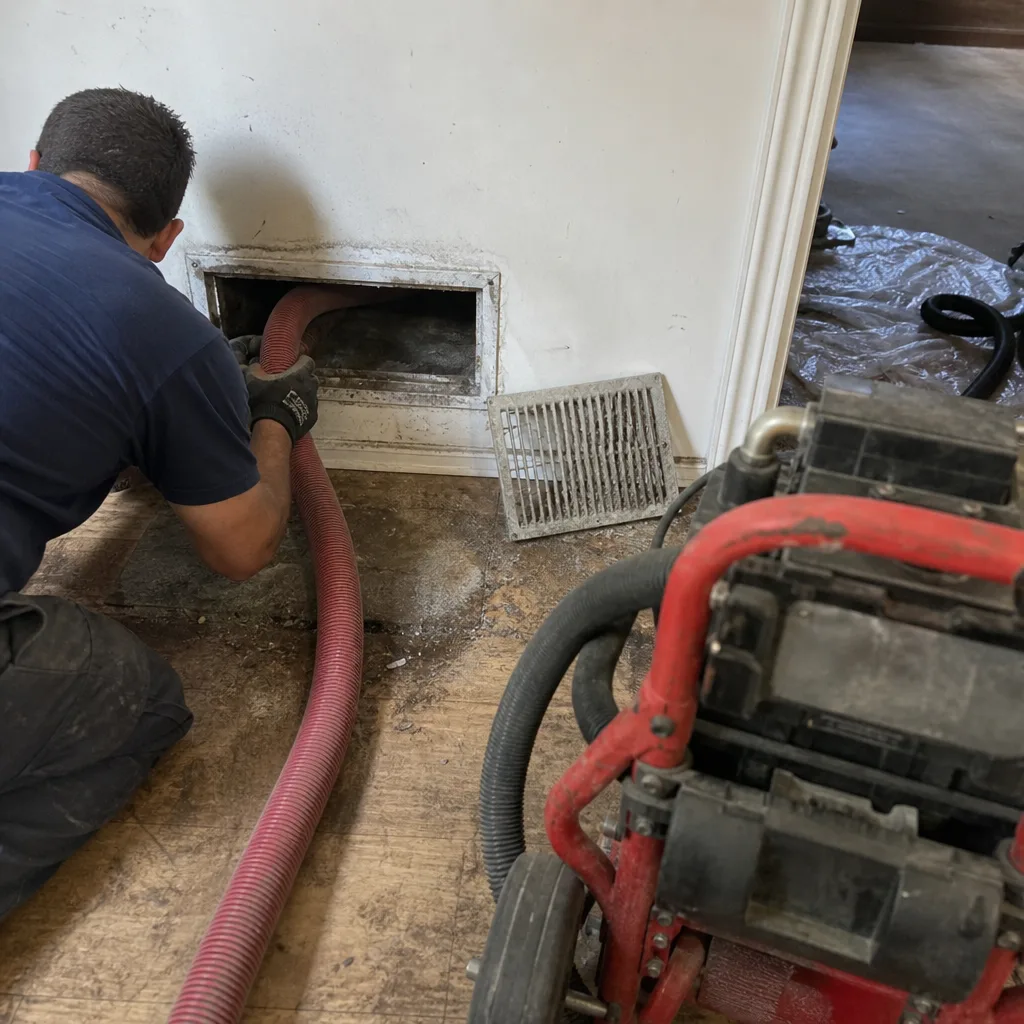 Before
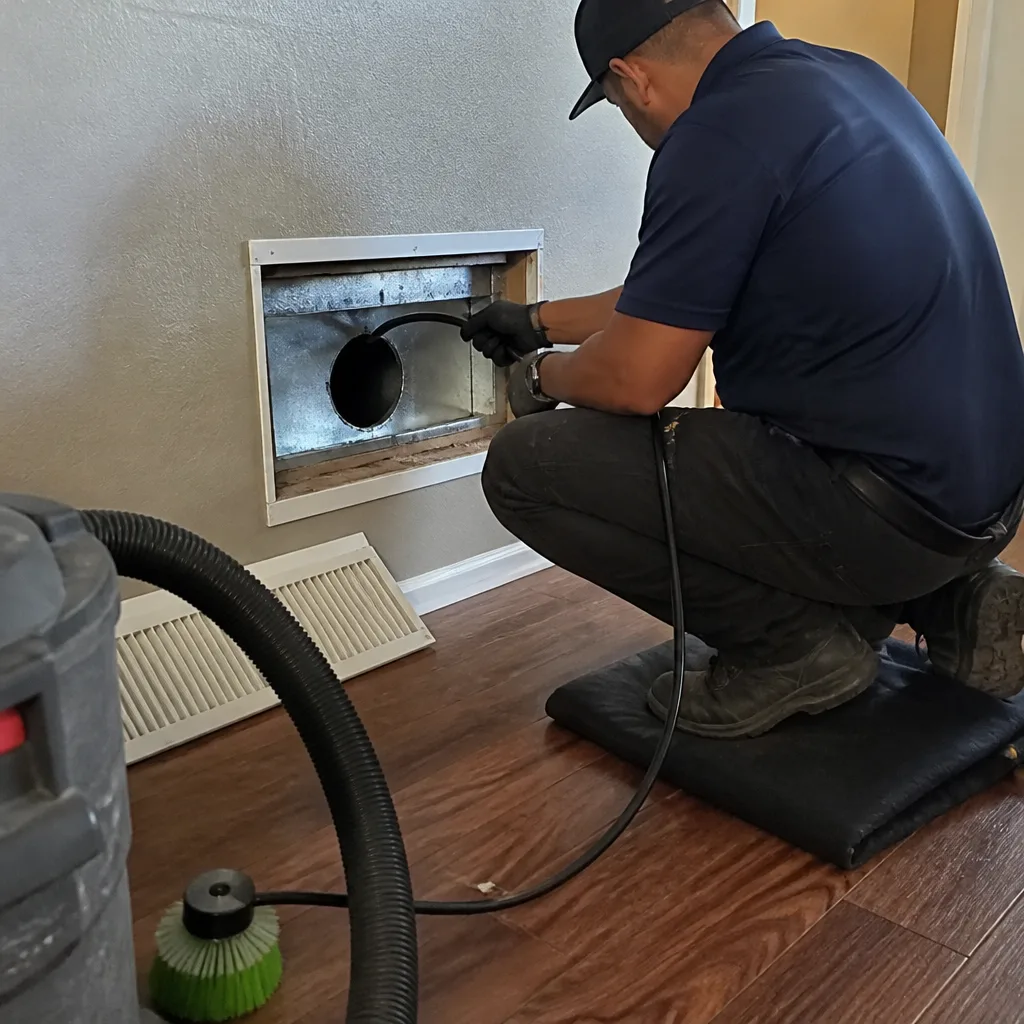 After
After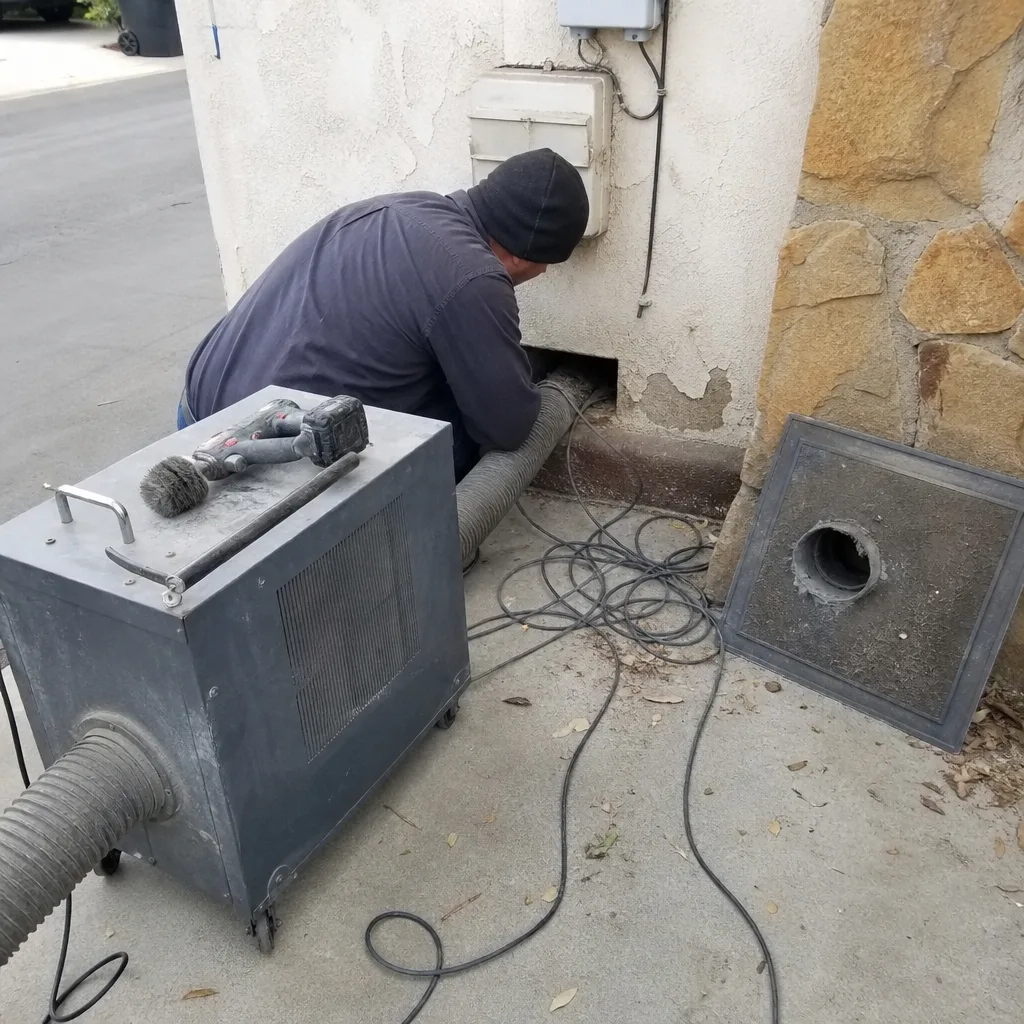 Before
 After
After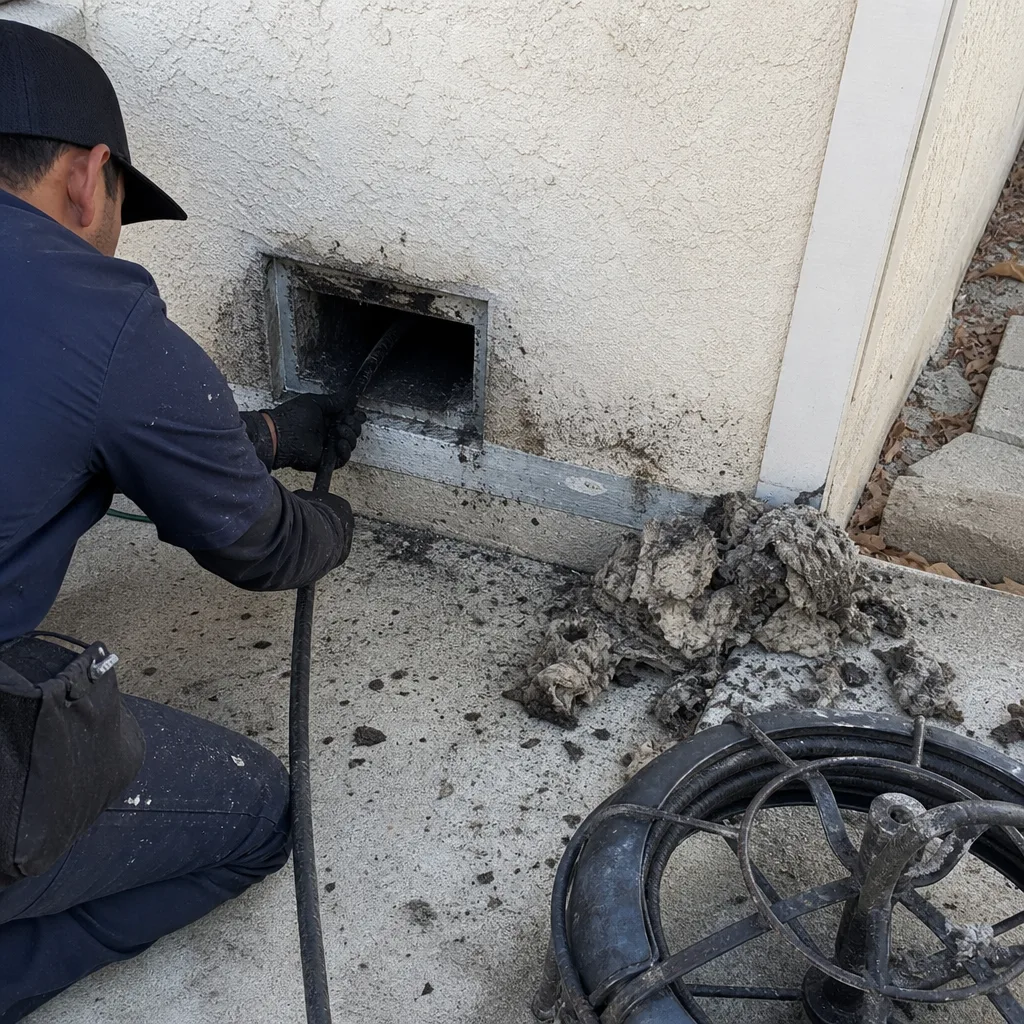 Before
 After
After