
Last updated October 15, 2026
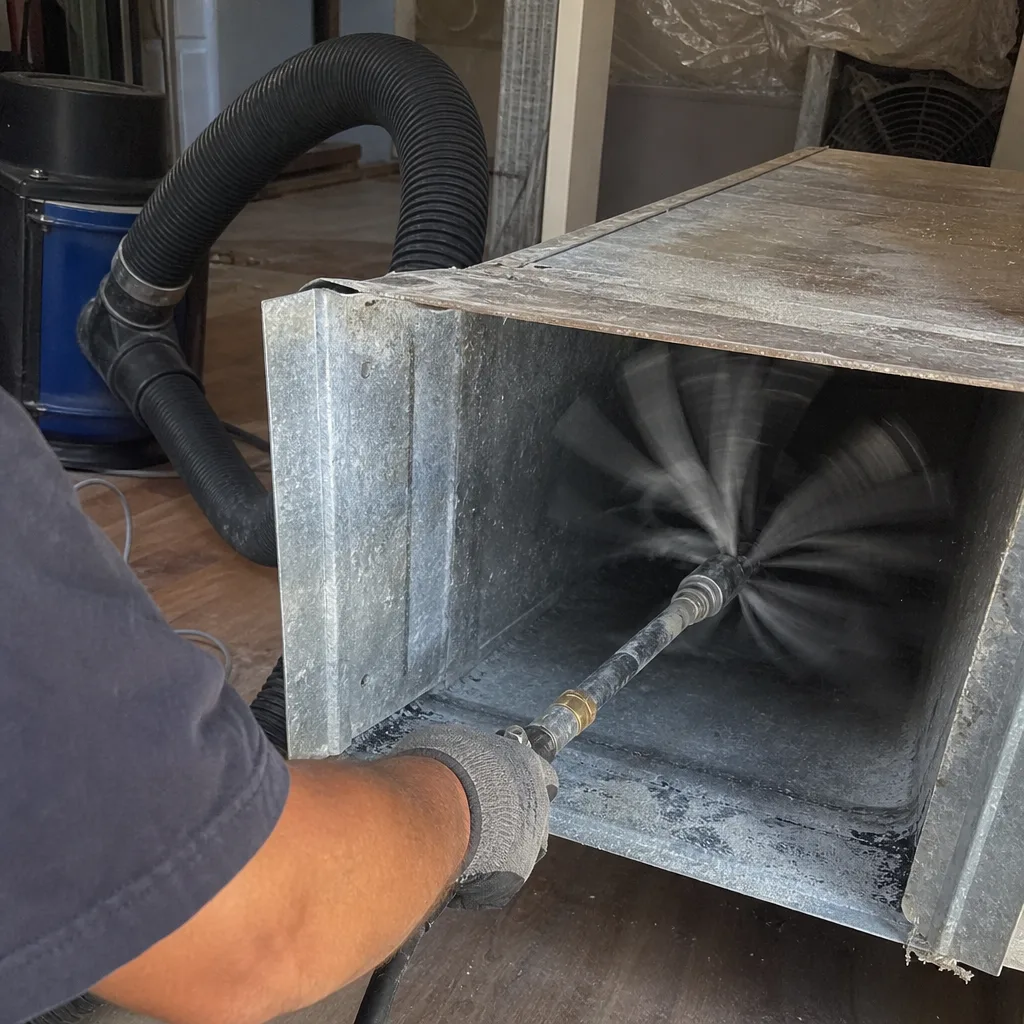
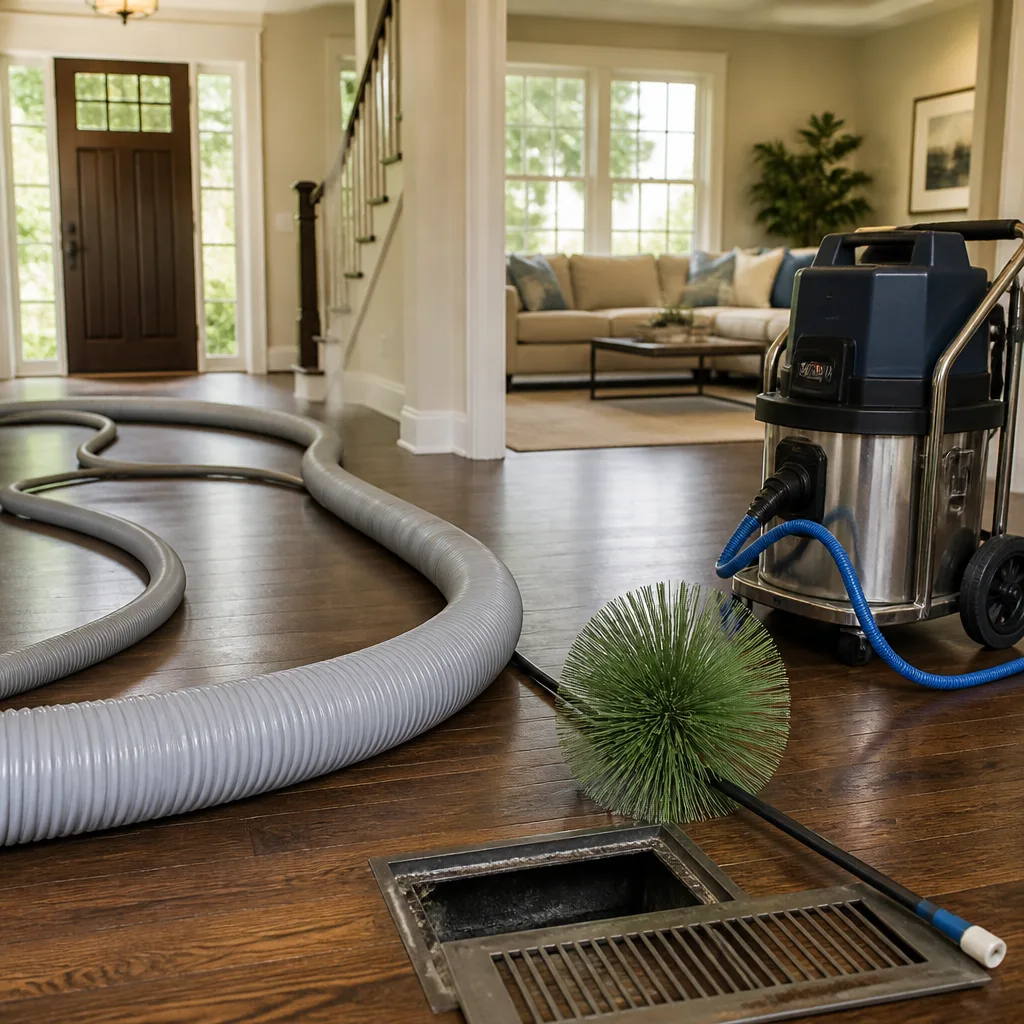 Whole-home duct cleaning
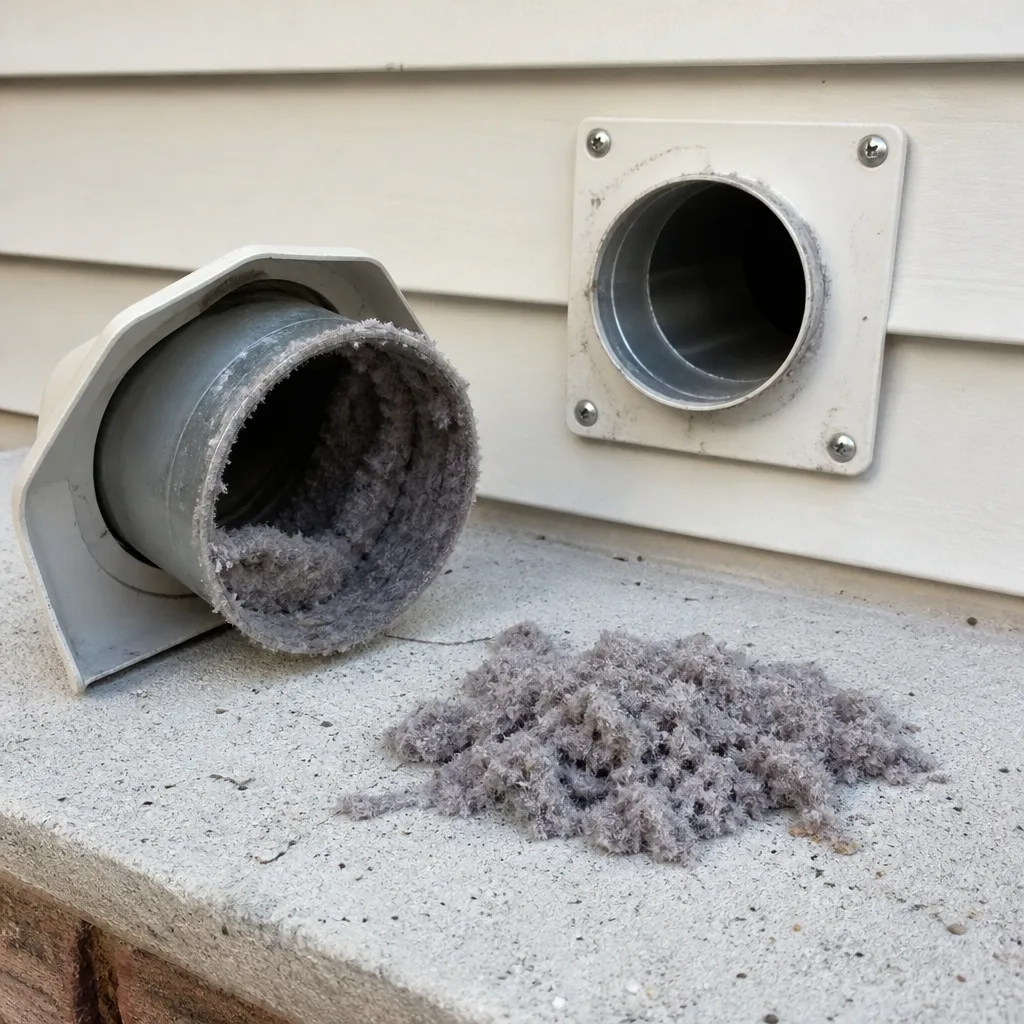 Dryer vent cleaning
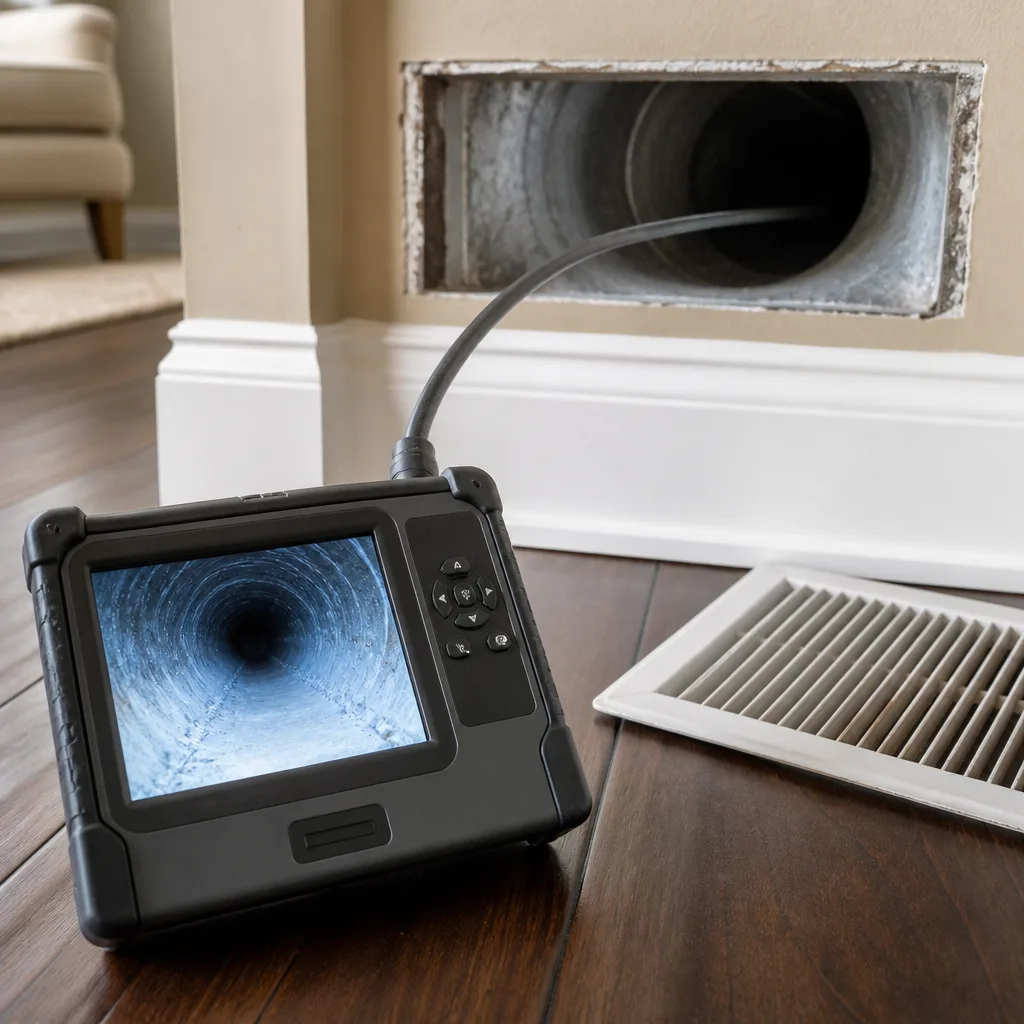 Camera inspection
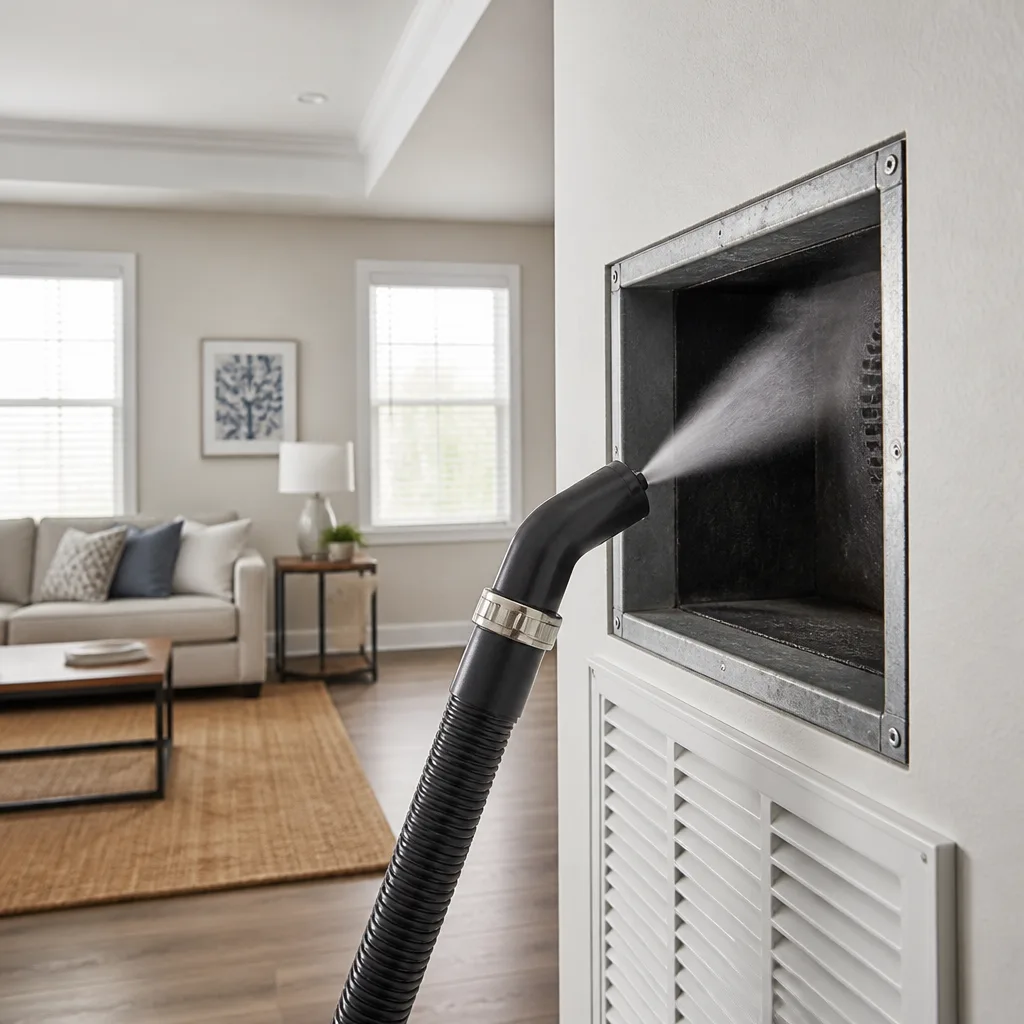 Sanitizing & deodorizing
Whole-system duct and dryer vent check with before-and-after photos - you see exactly what came out of your vents
That "$99 whole-house special" is a bait ad - the real number appears once they are in your hallway, or the "clean" is a shop-vac at the register. We photograph the inside of your ducts before and after instead.
The Complete Guide to Air Duct Cleaning in Riverside
The EPA doesn’t recommend air duct cleaning on a fixed schedule. Most Riverside homeowners are surprised to learn that fact, because the duct cleaning industry rarely leads with it. The honest answer is more nuanced, and for homes in Riverside specifically, more urgent than the EPA’s cautious national guidance suggests. This guide-along with our DIY vs Professional Air Duct Cleaning: The Riverside Homeowner’s Decision Guide-explains what’s actually inside your ductwork, what our inland climate does to it, what a legitimate cleaning visit looks like start to finish, and what a fair price looks like in this city. We’ve cleaned thousands of Riverside systems since 2005, and this is what we’ve learned.
Quick Answer
Most Riverside homeowners benefit from our Air Duct Cleaning services every 3 to 5 years, sooner if they have pets, live near open land, or experienced smoke intrusion during wildfire season. Air duct cleaning in Riverside typically costs $350 to $650 for a full system clean of an average three to four bedroom home. The process uses negative-air pressure and rotary brush equipment to remove debris from supply, return, and intake ductwork, not surface-only wiping. A properly cleaned Riverside system should leave the house smelling neutral, move air more freely, and come with photo documentation of every duct before and after.
Styles & brands we work with
Table of Contents
- What’s Actually Inside a Riverside Duct System
- Why Riverside’s Climate Changes the Cleaning Conversation
- How Professional Duct Cleaning Actually Works
- What a Technician Inspects, Room by Room
- How Pets and Kids Change the Cleaning Priority
- What “Done” Looks Like: The Post-Clean Checklist
- What Air Duct Cleaning Costs in Riverside
- Common Mistakes to Avoid
What’s Actually Inside a Riverside Duct System
We’ll tell you what we find, because knowing this makes you a better judge of whether a cleaning quote is honest or inflated. The inside of a duct system in Riverside is rarely a mystery. It’s an accumulation of specific things, in predictable proportions.
Here’s what we document on a typical Riverside home that hasn’t been cleaned in five or more years:
- Dust and fine particulate: The bulk of what we remove. Riverside’s dry, dusty air settles in ducts within months, not years. This is the fine gray-brown film you see on return grilles around the house.
- Pet dander and hair: In homes with dogs or cats, dander coats duct interiors and collects in low wall registers. Hair builds at register openings and inside return cavities.
- Construction debris: In homes built or renovated in the last decade, we often find drywall dust, paint chips, sawdust, and occasionally larger debris like drywall screws or pieces of insulation that were swept into registers during finish work.
- Insect activity: Riverside’s warm climate supports active insect populations year-round. Dead insects, shed exoskeletons, and spider webbing inside duct runs are common findings.
- Smoke and soot residue: Homes in the Box Springs and Sycamore Canyon areas, and anywhere downwind of wildfire activity, accumulate a fine black film inside supply ducts. It’s subtle, but it moves into living spaces every time the blower runs.
- Mold and moisture indicators: Less common in Riverside than coastal areas due to our low humidity, but present in homes with evaporative cooler issues, roof leaks near duct penetrations, or poorly sealed crawlspace returns. We flag it when we see it and recommend a separate assessment, because cleaning is not remediation.
The critical point: none of this material sits still. Every cycle of your HVAC system pushes a fraction of it back into the air you breathe. The volume depends on how much has accumulated and how well your filter captures it.
Our Mortons Air Duct Riverside home guide expands on how these contaminants enter in the first place. For now, understand that your ducts are not a sealed box. They’re a pathway, and in Riverside, the pathway collects more than it should.
Why Riverside’s Climate Changes the Cleaning Conversation
National duct cleaning guidance treats all climates the same. That’s a mistake. Riverside sits in an inland valley with specific conditions that accelerate duct contamination compared to coastal California homes in Orange County or San Diego.
Santa Ana winds. From October through March, Santa Ana wind events push dry, particulate-laden air across the Inland Empire. The wind picks up fine dust from the San Gorgonio Pass and the dry riverbeds that surround Riverside. Every time your HVAC system pulls outside air or your home’s envelope allows infiltration, that dust enters the system. Homes in La Sierra and Mission Grove near open land and the Santa Ana River corridor collect dust faster than homes in older, denser neighborhoods like Wood Streets.
Summer ozone and PM2.5 days. Riverside consistently ranks among the highest ozone readings in California due to inland geography trapping air masses. When your HVAC runs on high through July and August, it circulates whatever particulate is already in the ducts. High-runtime seasons mean more opportunity for duct-entrained debris to recirculate.
Low humidity is a double-edged factor. On one hand, we see far less mold in Riverside ducts than in coastal homes where humidity is persistent. On the other hand, dry air keeps dust airborne longer, which means it travels further through the return system before settling. The dust that does settle cakes more readily, adhering to oily residues from cooking or pet dander.
Wildfire smoke infiltration. The 2020 El Dorado Fire and other regional events showed how deeply smoke penetrates homes. What homeowners often miss is that smoke particulate doesn’t just settle on surfaces. It gets drawn through return vents and coats the interior of duct runs. Without cleaning, that smoke odor can reemerge every time the system cycles, months after the event.
If you live in Riverside and you haven’t had your ducts cleaned, the question isn’t really “should you?” It’s “what has accumulated since the last cleaning, and is it affecting your home?” The answer, in our experience, depends heavily on which part of the city you live in and how old your home is.
How Professional Duct Cleaning Actually Works
There are two fundamentally different methods sold as “duct cleaning” in Riverside, and the difference between them decides whether you’re spending money or wasting it.
Surface-only cleaning is what you get with low-ball coupons and quick-visit services. A technician inserts a small brush or air wand into the first few inches of each visible register, vacuums the opening, and calls it done. The interior duct runs, which contain the bulk of accumulated debris, remain untouched. The clean is cosmetic. It looks fine at the register. It does nothing for what’s deeper in the system.
Source-removal cleaning is what professional-grade equipment from brands like Rotobrush and Nikro is designed to achieve. The entire duct system is placed under negative air pressure using a high-powered vacuum connected to the main trunk line. With negative pressure pulling, a rotary brush system travels through each individual duct run, dislodging debris from the walls of the duct while the vacuum simultaneously captures it downstream. Nothing is blown into the living space, because the pressure gradient pulls toward the capture point, not out of the registers.
That’s the critical distinction. Source removal removes the material from the system. Surface cleaning moves it around and leaves it in place. One of the machines we use, the Rotobrush system, is designed specifically for this rotary-brush-plus-vacuum method. Nikro equipment serves the same function on different systems.
The complete professional process looks like this:
- Inspection and documentation. We photograph every accessible duct, return, and register before any work begins. You see what we see.
- System preparation. The HVAC is shut down. Supply registers are sealed. Drop cloths and shoe covers are in place before any equipment enters the home.
- Negative pressure connection. The vacuum collection unit connects to the main duct trunk.
- Agitation and removal. Rotary brushes travel each duct run, loosening debris as the vacuum pulls it out of the system.
- Register and grille cleaning. Every return and supply cover is cleaned and reinstalled.
- Post-clean inspection and photos. We document the condition of every duct after cleaning. The difference is visible.
- Final system check. The HVAC is restarted, and airflow at representative registers is verified.
If you’re considering Air Duct Cleaning in Riverside, ask one question: does the company use rotary brush source removal with negative air pressure? If they can’t answer clearly, keep looking. We’ll always explain the method before quoting the price.
What a Technician Inspects, Room by Room
No two Riverside homes are identical. A 1950s ranch in the Wood Streets has different ductwork than a 2005 tract home in Orangecrest or a newer build in Sycamore Canyon. That’s why a proper cleaning starts with an inspection, and it starts by understanding what runs where.
Here’s what we’re actually looking at, room by room, before we quote a price.
The return air path. This is the most informative part of any system. The return is where air enters the system, and it’s where visible accumulation concentrates fastest. We inspect the main return grille, the return plenum, and the return duct runs. In many Riverside homes, especially those built before the 1990s, the return uses wall cavities rather than dedicated duct runs. These cavity returns collect debris at alarming rates and are harder to clean thoroughly. We document them carefully.
Supply registers in each bedroom. Kids’ bedrooms with wall registers low to the floor collect lint, pet hair, and whatever tiny objects find their way inside. We remove each register cover, inspect the visible run, and note any reduction in airflow that might indicate a partially collapsed flex duct or a blockage.
Living and family rooms. The largest registers in the house are usually here, and they move the most air. The interior duct runs serving these spaces often show the heaviest dust accumulation because they’ve moved the most air over the years. We document the condition of these runs specifically because they’re the primary recirculation pathway for your largest living spaces.
Kitchen and laundry areas. Kitchen return vents collect a film that combines cooking grease with dust over time. This film attracts and holds particulates more aggressively than dry surfaces. Laundry room registers, especially those near the dryer, often hold lint that migrated from the dryer installation or vent path. If we see significant lint near a laundry register, we’ll also talk with you about your dryer vent condition, since a compromised dryer vent circulating moist lint-laden air through the supply system compounds duct contamination.
Bathrooms. Bathroom exhaust fans are not connected to the HVAC system, but many Riverside homes have bathroom supply registers or ceiling vents nearby that interact with humidity. We inspect these to confirm they’re sealed adequately and not drawing bathroom moisture into the adjacent duct run.
Hallways and central returns. Central returns in hallways, common in Riverside houses, tend to act like catch basins for everything in the house because they’re located in high-traffic areas with high airflow. These returns often show significant accumulation even in homes where other registers look acceptable.
The inspection isn’t theater. It determines what the cleaning will involve, what equipment will be used, and what the written price will be. At Morton’s, the written price comes before any work begins, based on what we actually saw during that inspection, not on what a call center assumed from a script.
How Pets and Kids Change the Cleaning Priority
Riverside families with pets and small children are our most frequent callers, and there’s a reason. The combination of our dry climate and furry housemates creates a very specific duct condition.
Pet dander is remarkably small, often between 2.5 and 10 microns. It enters the return airstream easily and travels deep into duct runs. Once inside, it coats the interior surfaces. Then the next wave of dust attaches to that dander layer, then the next wave, until the duct accumulates a fluffy gray-brown interior lining that we remove by the pound in some homes.
Children matter in a different way. Toddlers operate on the floor, where the air registers sit. They play within inches of wall vents that have been collecting dust, dander, and whatever else drifts through the home. Beyond the air quality consideration, there’s a practical issue: toys, crayons, and food particles find their way into floor vents in homes with small children. We’ve retrieved small plastic animals, puzzle pieces, and enough Cheerios to fill a cereal bowl from return vents over the years.
The practical takeaway for Riverside families with kids or pets: your cleaning interval should be shorter than the general 5-year recommendation. If you have multiple pets, we’d suggest evaluating your system every 3 years. If a family member has allergies or respiratory sensitivities, that interval may be shorter still. For those interested in related lung-health factors at home, we’ve also written about Dryer Vent Cleaning in Riverside, which addresses a separate but related indoor air issue.
One more consideration: we understand nap schedules. Our technicians work with quiet, professional-grade equipment when possible, and we’ll coordinate timing around a sleeping toddler. We’ve been in homes where the crew moved quietly through the halls while a baby slept in the back room. It’s a small thing, but it’s the kind of consideration that actually matters to the families we serve.
What “Done” Looks Like: The Post-Clean Checklist
A professional duct cleaning in Riverside should end with more than a handshake and a bill. Here’s what you should receive before the technician leaves your home.
- Photographic documentation. Before and after photos of each duct run, return cavity, and register. Not a sample. Every one. If a company can’t show you photos of the inside of your ducts after cleaning, ask why.
- A walkthrough of the work performed. The technician should walk with you to the documented areas and explain what was removed, what was found, and whether anything unusual was encountered (damage, water staining, separated duct joints).
- A written summary of the cleaning. A one-page description of the work: what method was used, what equipment was used, what was found, and any recommendations for follow-up.
- Confirmation that the system is running normally. A quick check at representative supply registers to verify airflow is moving properly after the cleaning.
- The home left clean. Floors protected during the work, no dust or debris tracked through the house, and a photo of the clean-up itself. At Morton’s, the photo of the clean-up before the crew leaves is standard practice, not an add-on.
If a company leaves and you have no photos, no summary, and no way to confirm what was done inside the ducts, you haven’t received a professional service. You’ve received a bill.
What “done” should feel like: the house smells neutral when the system runs. The air from the registers doesn’t have that metallic, dusty smell common in hot Riverside afternoons. Airflow at each register feels balanced, not weak in distant rooms. And you have documentation that shows exactly what changed inside the system.
What Air Duct Cleaning Costs in Riverside
Let’s talk real numbers. The range for a legitimate source-removal cleaning in Riverside, using professional equipment and comprehensive documentation, falls between $350 and $650 for most single-family homes. Here’s how that breaks down:
- Small home (1,000 – 1,500 sq ft, up to 10 ducts): $350 – $450
- Medium home (1,500 – 2,500 sq ft, 10 – 16 ducts): $450 – $600
- Large home (2,500+ sq ft, 16+ ducts): $550 – $800+
- Additional factors: two HVAC systems, older cavity returns, significant construction debris, or homes with extensive duct runs at the far ends of the house may add $100 – $200.
You will see ads for $99 whole-house duct cleaning in Riverside. Those prices are not for source-removal cleaning. They’re loss leaders designed to get a technician in the door, where the upsell begins. By the time the “necessary add-ons” are included, the price often exceeds our honest upfront range, and the work still isn’t source removal. We advise homeowners to treat any whole-house price below $300 with skepticism.
The price Morton’s quotes is the price you pay. It’s a written price, based on the inspection, agreed before work starts. If the system is more complex than expected, we’ll discuss it before proceeding, and you’ll approve any change in writing before we continue. The 365-Day Done Right Promise applies to every job: if the job isn’t right, we make it right. Full stop.
For homes in neighborhood-specific situations, practical costs vary. A well-maintained, newer home in Orangecrest may sit at the lower end. An older Wood Streets home with cavity returns and decades of layered accumulation may sit at the higher end. The system itself determines the price, not a script.
Common Mistakes to Avoid
- Hiring based on price alone. The $99 special is not the same service as a $450 source-removal clean. The cheap option often isn’t cleaning your ducts at all, just the register openings. You’ll pay twice: once for the cheap visit, then again for the real work.
- Skipping the inspection step. Any company that quotes a price over the phone without inspecting the system is guessing. Systems vary enormously between Riverside neighborhoods. A written price based on an actual inspection is the only honest quote.
- Accepting “it’s done” without documentation. Photos are the standard of proof in this industry. If you can’t see before and after images of your own ducts, you have no way to verify the work. At Morton’s, you get photos of every duct, every time, before the technician leaves.
- Cleaning without addressing an underlying issue. If the return is pulling air through an unsealed crawlspace, or the filter is undersized, cleaning the ducts only resets the clock. We’ll tell you when we see a contributing issue, because cleaning a system with an unfixed problem is just deferring the next clean.
- Expecting a filter replacement to substitute for cleaning. A better filter catches more particulate going forward, but it does nothing about what’s already accumulated inside the ducts. Both are needed for true improvement.
- Waiting until the problem is visible. By the time you see dust trails from registers or dust return on surfaces a week after cleaning, the duct accumulation is significant. The goal is to clean before that point.
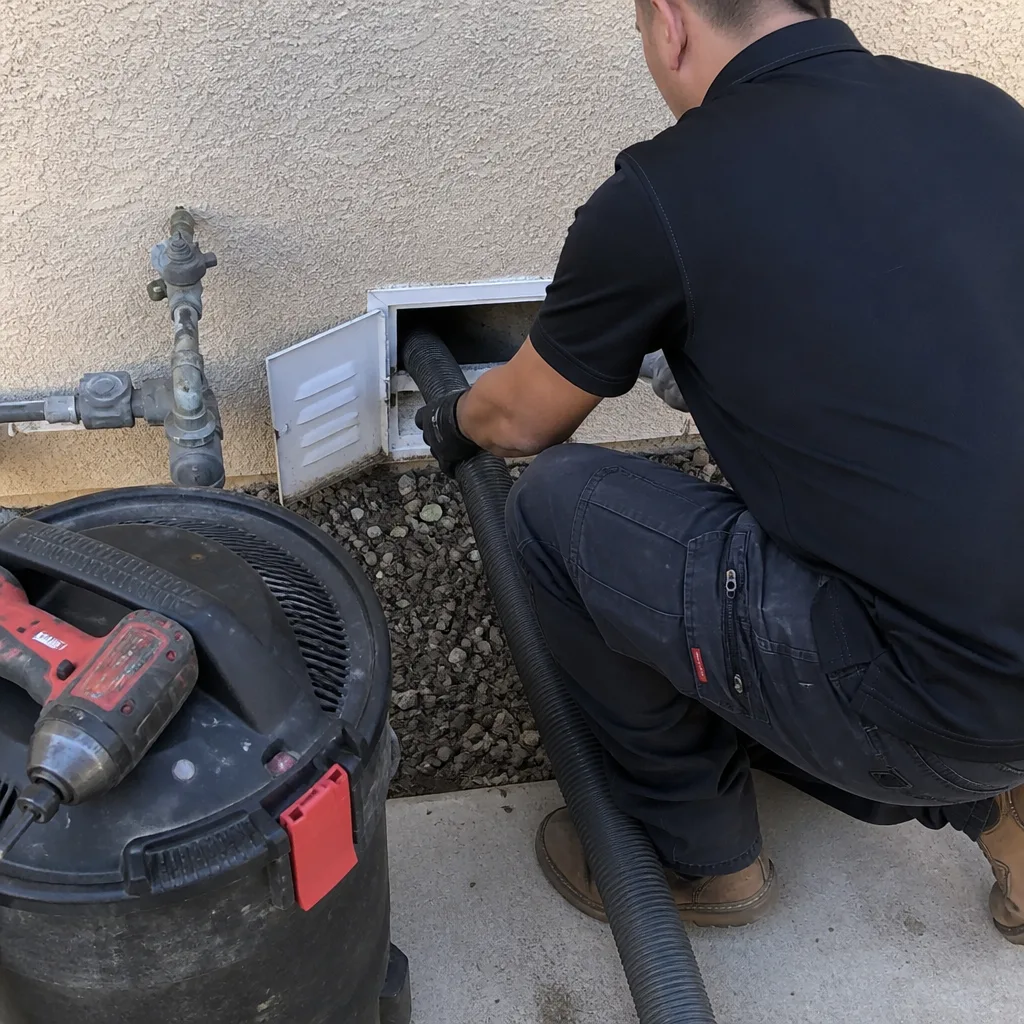
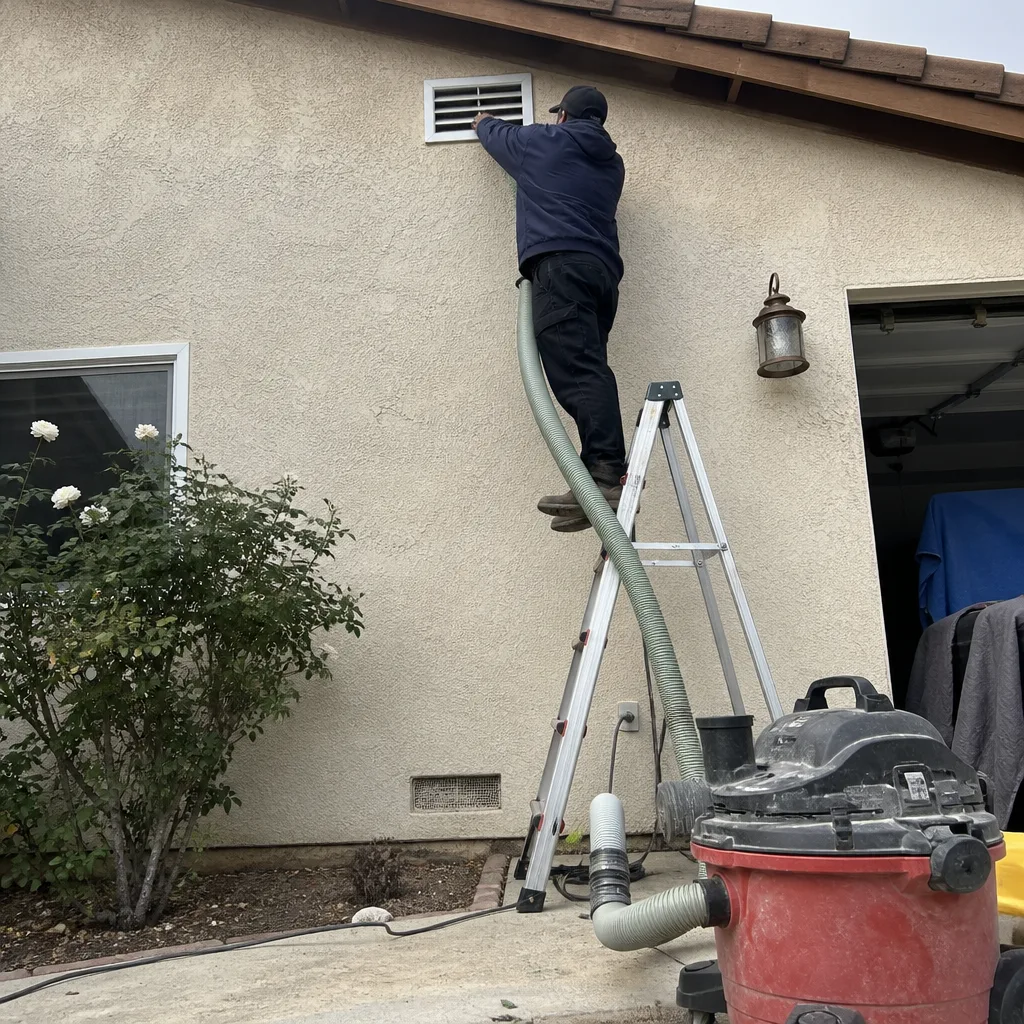
See the difference
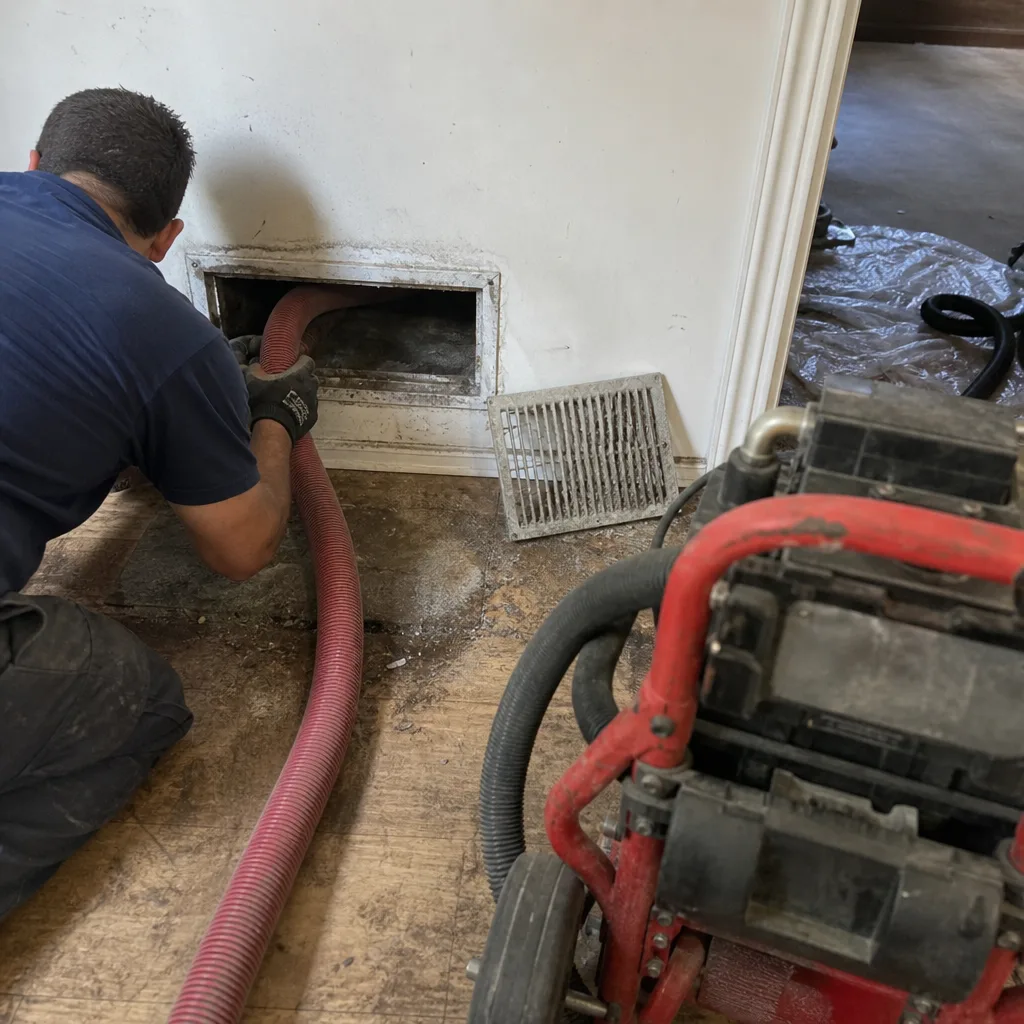 Before
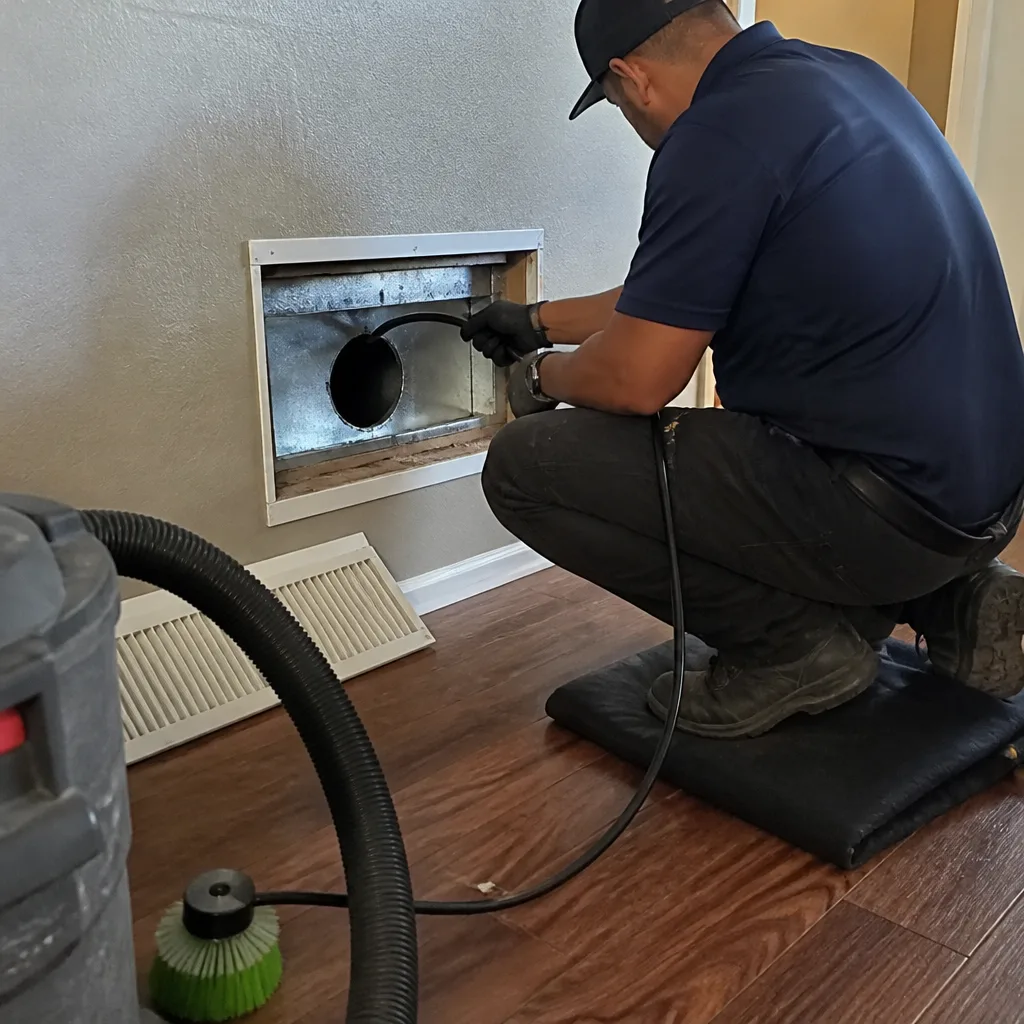 After
After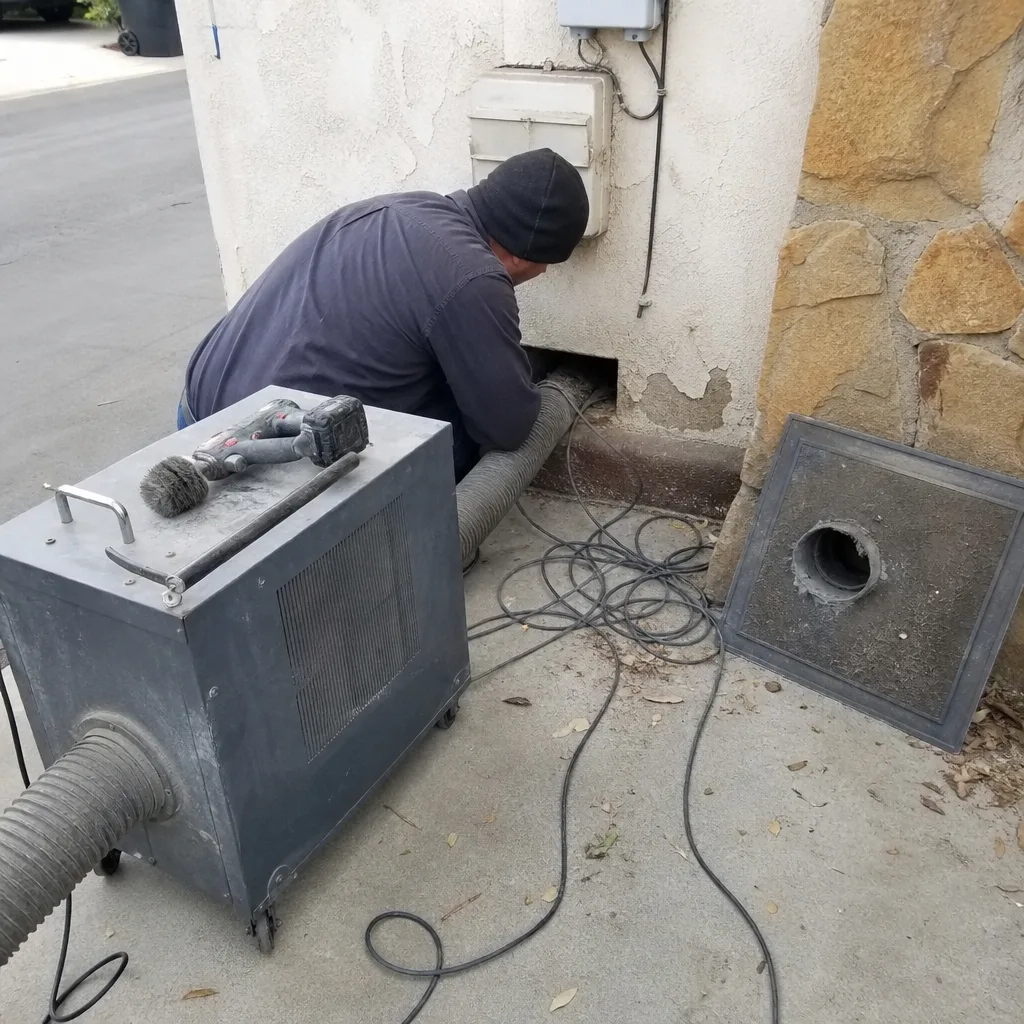 Before
 After
After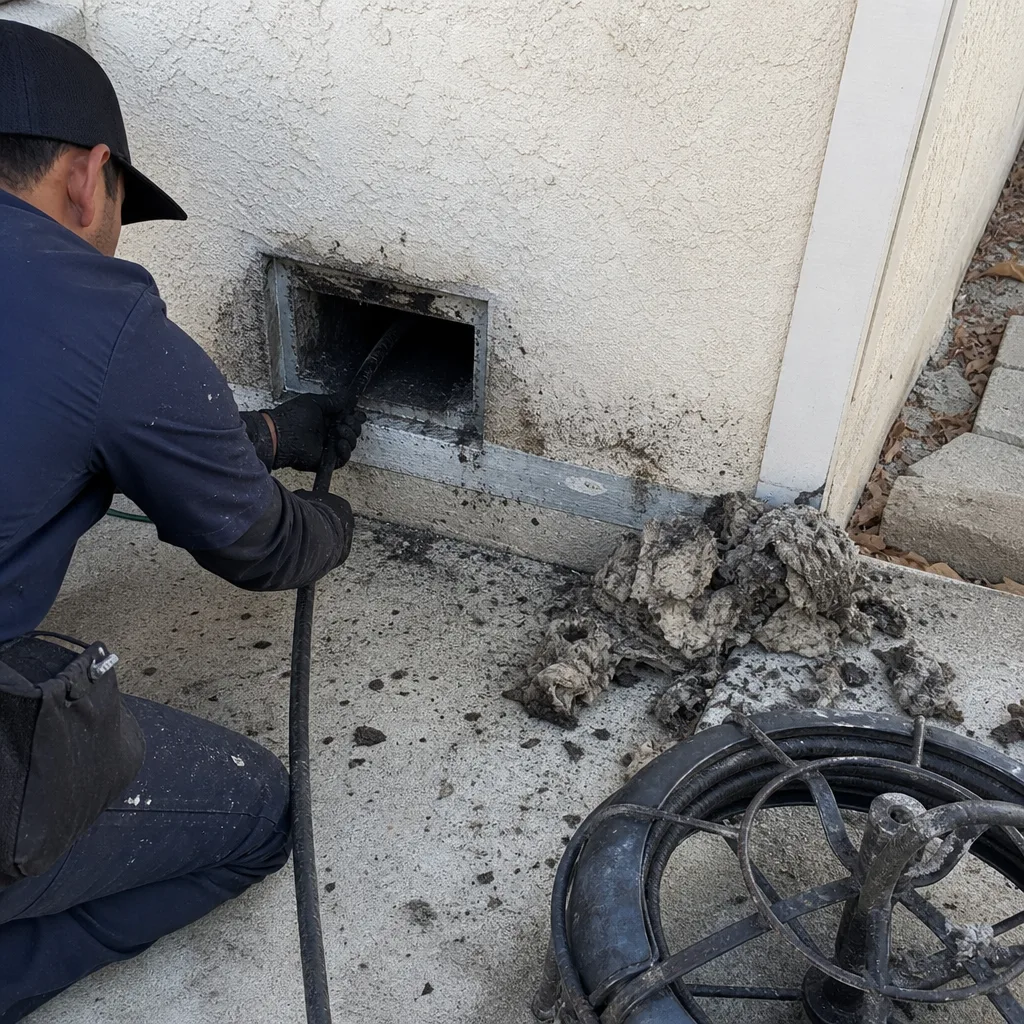 Before
 After
AfterWhen to Call a Professional
Call a professional when you see visible dust build-up or streaking around return grilles, when the home smells dusty when the system runs, when you’ve completed a renovation with drywall work, when wildfire smoke has entered the home, or when it’s been more than 5 years since the last cleaning and you have pets. For help choosing the right company, see How to Hire a Air Duct Cleaning Contractor in Riverside: A Step-by-Step Guide. A professional inspection answers the question definitively. Mortons Air Duct Riverside offers free estimates in Riverside, so you can learn exactly what your system contains without spending anything. Call (350) 240-5513 and a real person will answer.
Frequently Asked Questions
A legitimate source-removal air duct cleaning in Riverside costs $350 to $650 for most single-family homes, with price determined by home size, number of ducts, and system complexity. Written estimates are provided after an inspection, before any work begins. Call (350) 240-5513 for an exact quote for your Riverside home, and we’ll provide a written price with no obligation.
Most Riverside homes benefit from professional duct cleaning every 3 to 5 years. Homes with pets, homes near open land in areas like Mission Grove or La Sierra where Santa Ana winds carry additional dust, or homes with allergy sufferers may need cleaning every 3 years. There’s no universal rule; the condition of the system itself is the best guide, and an inspection determines actual need.
Cheap quotes typically reflect surface-only cleaning, where a technician vacuums register openings but leaves the interior duct runs untouched. Source-removal cleaning with rotary brush equipment and negative air pressure costs more because it actually removes accumulated debris from the entire system. For more guides & resources on understanding duct cleaning quotes, visit our blog. The lower price often buys a cosmetic clean, not a system clean. Call (350) 240-5513 to understand exactly what’s included in our written price.
Ask for before and after photographs of the interior of every duct run, not just a sample photo. A professional duct cleaner provides photographic documentation of the entire system. At Morton’s Air Duct Riverside, every completed job includes before and after photos of every duct, a written summary of the work performed, and a photo of the clean-up before the crew leaves.
The EPA does not recommend air duct cleaning on a fixed schedule, but that guidance is for national averages, not for Riverside’s specific climate. Our inland heat, Santa Ana wind-driven dust, and wildfire smoke intrusion create conditions that coastal homes don’t face. The honest answer: cleaning is justified here when inspection shows significant accumulation, which happens faster in Riverside than in coastal California homes. The decision should follow documentation of what’s actually in your ducts.
Air duct cleaning removes accumulated dust, pet dander, and pollen from the pathway your HVAC system uses to heat and cool your home. For family members with allergies, reducing the volume of particulate that recirculates with every system cycle can meaningfully improve air quality. The benefit is real but specific: it removes what’s already accumulated, and pairing the cleaning with high-quality filtration addresses the ongoing load.
The Bottom Line
Riverside’s climate creates duct conditions that differ from coastal California. Santa Ana winds, summer ozone days, wildfire smoke, and dry particulate all accumulate inside ductwork faster than national averages suggest. A professional cleaning in this city should involve source-removal methods, room-by-room inspection, documented before and after photos, and a written price agreed before work starts. For Riverside families with pets or kids, the cleaning interval should be shorter. The honest approach to duct cleaning isn’t fear-based urgency and it isn’t scheduled marketing. It’s assessment, documentation, and thorough removal. That’s the standard we’ve worked to since 2005, and it’s available to any Riverside homeowner who calls (350) 240-5513.
Written by Paul Adeyemi, Owner at Mortons Air Duct Riverside, serving Riverside since 2005.